Structural Drying and Dehumidification in Clayton, NC
Structural drying finishes what extraction starts. In Clayton, equipment is sized to each room, readings are taken daily and the job stops only when wet framing and subfloor reach dry targets.
(888) 578-4720Call about drying a wet home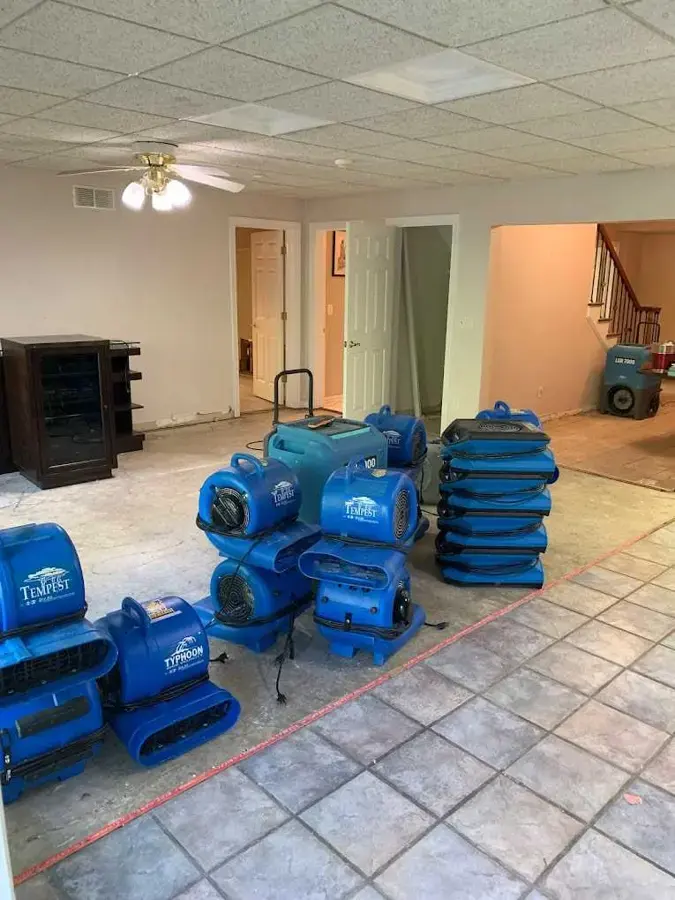
What to do when framing and subfloor stay wet in Clayton
- Map Moisture meters and a thermal camera mark every wet area and set the starting numbers.
- Place Equipment is positioned by room volume and how wet each surface is, not a fixed count.
- Monitor Daily visits record readings in the same spots and adjust the equipment.
- Finish Equipment comes out only when readings match dry targets in every spot.
How structural drying and dehumidification is handled in Clayton
Measured before anything is cut
The tech who does the walkthrough maps how far the water traveled into subfloor, baseboard, wall cavities and the crawl space, so the plan fits what is actually wet.
Dried as a whole structure
The drying team sizes air movers and LGR dehumidifiers to the class of loss and dries framing and cavities, not only the surfaces in view.
Logged for the adjuster
The restoration team keeps the moisture map, daily psychrometric readings and timestamped photos taken before any material comes out.
What does structural drying and dehumidification cost in Clayton, NC?
Structural drying in Clayton generally runs $1,200 to $15,000. One room with a Class 1 or 2 loss sits low, and a Class 4 job or most of a house reaches the top.
Single room, light or moderate wetting
- Air movers and an LGR unit
- Readings every visit
- Roughly three to five days
Multiple rooms or an under-floor space
- Cavity and subfloor drying
- Several dehumidifiers
- Updated moisture maps
Deep-held moisture or most of a house
- Desiccant dehumidification
- Hardwood drying mats
- Longer monitoring period
Ranges are typical, not a quote. Water category, square footage, material class and how fast drying started move the number most; the water damage cost calculator gives a closer planning range.
The structural drying and dehumidification process in Clayton, step by step
- 1
Map
Wet areas are marked with meters and photographed.
- 2
Place
Equipment goes in by room volume and wetness.
- 3
Monitor
Moisture numbers are recorded at every visit.
- 4
Finish
Equipment is removed only when readings reach dry targets.
Water that is no longer visible is still in the structure. Wood, drywall and subfloor hold moisture, and Clayton's humid subtropical climate slows natural drying, so equipment and a plan are needed after a storm or leak. Skipping this stage is how hidden dampness ends up in walls and floors weeks later.
How the drying plan is built
Crews map the wet areas, then choose air movers and dehumidifiers for the room volume. Class 1 and 2 losses involve less water, while Class 4 jobs involve deeply held moisture in dense materials like hardwood. Dense materials such as hardwood and framing lumber release water slowly, which is why they set the schedule. Equipment placement is logged so a second visit can compare the numbers.
- Air movers sized to the floor and wall area
- LGR or desiccant dehumidifiers for the air
- Hardwood drying systems where needed
- Daily readings in the same spots
Older and newer homes
The Clayton Historic District has almost 300 historic homes and buildings, and newer subdivisions have modern construction. Plaster, old hardwood and modern drywall dry differently, so each home gets its own plan. Cleveland, Powhatan and Flowers Plantation homes follow the same standard, whatever their age.
Knowing when it is dry
Drying ends when readings match dry targets, usually three to five days for a simple room and longer for hardwood or crawl spaces. Records show the adjuster each reading. See water extraction for the step before drying. Crews walk the homeowner through the final readings before pulling anything.
Structural drying and dehumidification across Clayton and nearby towns
Structural drying crews serve Downtown Clayton, Flowers Plantation, Glen Laurel, Riverwood, Cleveland and Powhatan, including homes in the 27520 and 27527 ZIP codes, in houses of any age.
The same service nearby: structural drying and dehumidification in Garner, Knightdale, Raleigh.
Related water damage services in Clayton
Structural Drying and Dehumidification questions in Clayton, NC
How many days should drying run?
Usually three to five days for one room, and longer for hardwood, crawl spaces or large losses. Readings decide.
Why not just open windows and run fans?
Humid air outside can add moisture to wet materials. Dehumidifiers and air movers control the conditions, so framing dries steadily instead of staying damp.
What makes an LGR dehumidifier different?
A low grain refrigerant unit that removes moisture from air more efficiently than standard units.
Can hardwood floors be dried?
Often, with special drying systems and time, but some boards may cup or need replacing. Readings show the outcome before any sanding or refinishing is planned.
Why are readings taken daily?
Daily readings show progress and tell the crew when to move or remove equipment.
Is drying loud?
Yes, air movers and dehumidifiers make noise and warm the room, but they only run while readings show moisture left. Crews place them to limit the disturbance.
Dry your Clayton home right
Share what got wet and when, and the crew will plan the equipment, the readings and a finish date based on numbers.
- Garner, NC and southern Wake County
- Every hour of every day