Storm and Flash Flood Cleanup in Clayton, NC
Floodwater from storms and swollen rivers is contaminated the moment it enters a home. Clayton crews contain the area, extract the water, remove porous materials and dry the whole structure with documented readings.
(888) 578-4720Call about flood cleanup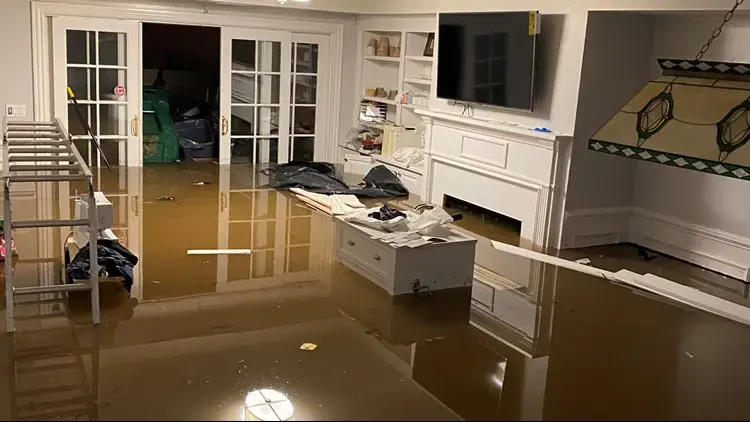
What to do when storm water gets inside in Clayton
- Contain The affected area is isolated, and crews put on protective gear before entering.
- Extract Contaminated water is pumped and pulled from floors, garages and low rooms.
- Remove Soaked pad, insulation and wet drywall are cut out, bagged and photographed.
- Treat and dry Antimicrobial goes on surfaces, then dryers run until readings reach target.
How storm and flash flood cleanup is handled in Clayton
Measured before anything is cut
The tech who does the walkthrough maps how far the water traveled into subfloor, baseboard, wall cavities and the crawl space, so the plan fits what is actually wet.
Dried as a whole structure
The drying team sizes air movers and LGR dehumidifiers to the class of loss and dries framing and cavities, not only the surfaces in view.
Logged for the adjuster
The restoration team keeps the moisture map, daily psychrometric readings and timestamped photos taken before any material comes out.
What does storm and flash flood cleanup cost in Clayton, NC?
Storm and flood cleanup in Clayton generally runs $3,000 to $35,000 or more. A garage or one room sits near the bottom, and a flooded house with several rooms and a crawl space moves toward the top.
Garage or a single room
- Category 3 pumping
- Flood cuts and soaked pad removal
- Antimicrobial treatment and drying
Multiple rooms and a crawl space
- Containment barriers
- Under-floor insulation removed
- Structural drying
Most of the home
- Whole-floor tear-out
- HEPA air scrubbing
- Contents sorted and photographed
Ranges are typical, not a quote. Water category, square footage, material class and how fast drying started move the number most; the water damage cost calculator gives a closer planning range.
The storm and flash flood cleanup process in Clayton, step by step
- 1
Assessment
Water category, depth and spread are measured and recorded.
- 2
Extraction
Contaminated water is pumped out with protection in place.
- 3
Cleanout
Soaked materials are cut out, bagged and photographed.
- 4
Drying
Antimicrobial is applied, then equipment dries the structure to target.
Clayton has dealt with flooding from named storms. Hurricane Matthew in 2016 and Hurricane Florence in 2018 caused severe flooding, road closures and long power outages across inland North Carolina, and in August 2024 Tropical Storm Debby pushed the Neuse River over its banks while the town closed flooded greenway sections.
What flood cleanup involves
Crews wear protective gear, contain the work area and extract the water. Anything porous that floodwater touched is evaluated for removal, because bacteria stay in carpet, pad and insulation. Crews also photograph the waterline and damaged contents for the claim before anything is thrown away.
- Category 3 extraction and pumping
- Flood cuts above the waterline
- Pad, insulation and soaked contents sorted
- Antimicrobial treatment before drying
Local flood warnings
A NOAA gauge on the Neuse River near Clayton notes that NC 42 floods and that floodwaters can approach the entrance of East Clayton Elementary School. Sam's Branch, Little Creek, Middle Creek and Marks Creek are other water features around town. Water from heavy storms can also reach garages and low rooms in homes far from a creek.
Drying and documentation
After cleanout, dehumidifiers and air movers dry the structure, and structural drying records show an adjuster what was removed, and equipment stays until framing and subfloor read dry. Flood damage often needs separate flood coverage, so check with your own insurer.
Storm and flash flood cleanup across Clayton and nearby towns
Flood cleanup crews cover Clayton, Cleveland, Powhatan, Riverwood and Glen Laurel, plus Flowers Plantation, and homes in both the 27520 and 27527 ZIP codes, from the town center outward.
The same service nearby: storm and flash flood cleanup in Garner, Knightdale, Raleigh.
Related water damage services in Clayton
Storm and Flash Flood Cleanup questions in Clayton, NC
Why is floodwater treated as contaminated?
It carries soil, bacteria and runoff, so porous materials like carpet, pad and insulation it touches are usually removed instead of dried.
Does my homeowners policy cover river flooding?
Rising floodwater usually needs separate flood coverage, while water from a roof or pipe may fall under the standard policy. Ask your own insurer.
Can the Neuse River flood affect Clayton homes?
River flooding after Hurricane Matthew, Hurricane Florence and Tropical Storm Debby shows it can reach inland roads and greenways. Each home depends on its own site.
What is a flood cut?
A flood cut removes drywall a short way above the water mark so framing can dry and wet insulation can come out.
How long does flood drying take?
Often a few days to a couple of weeks, depending on the amount of water, materials and structure. Daily readings decide the finish.
What should I photograph before cleanup?
Photograph the waterline, damaged belongings and wet surfaces before moving anything. Those photos support the claim and the scope.
Clean out after the flood
Tell the crew how high the water got and what it touched, and they will bring pumps, protection and dryers.
- Garner, NC and southern Wake County
- Every hour of every day