Crawl Space Water Removal in Garner, NC
Storm water, a broken pipe or a dripping air handler can leave a pond under a Garner home. The restoration team pumps it out, pulls wet insulation and dries the joists and subfloor to a verified reading.
(888) 578-4720Water under the house? Call now.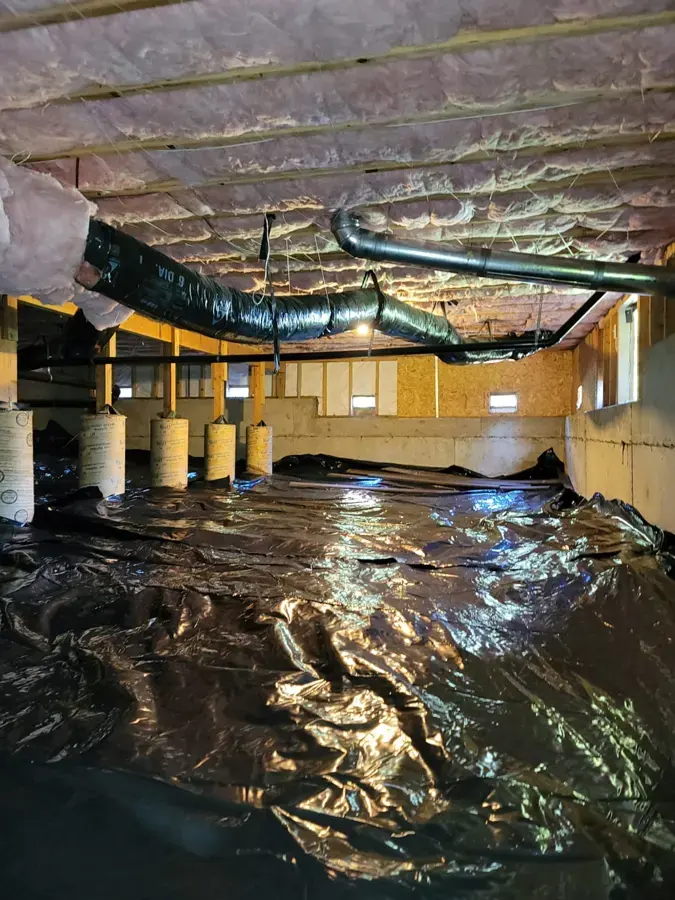
What to do when water collects in the crawl space in Garner
- Stay out if water is deep Do not crawl into standing water near wiring, the furnace or a pump.
- Shut off the source Close the main valve if a pipe is leaking under the house.
- Kill power to the air handler Switch off the HVAC unit at the breaker if water reaches it.
- Photograph through the access Take photos from the crawl door before anything is moved.
How crawl space water removal is handled in Garner
Measured before anything is cut
The tech who does the walkthrough maps how far the water traveled into subfloor, baseboard, wall cavities and the crawl space, so the plan fits what is actually wet.
Dried as a whole structure
The drying team sizes air movers and LGR dehumidifiers to the class of loss and dries framing and cavities, not only the surfaces in view.
Logged for the adjuster
The restoration team keeps the moisture map, daily psychrometric readings and timestamped photos taken before any material comes out.
What does crawl space water removal cost in Garner, NC?
In Garner, NC, crawl space water removal typically runs $1,500 to $15,000. A pump-out and drying of a small crawl space sits at the low end; insulation removal, a new vapor barrier and Category 3 storm water push it higher.
Pump-out and drying
- Standing water pumped
- LGR dehumidifier setup
- Daily wood readings
Insulation and barrier out
- Wet insulation removed
- Damaged barrier removed
- Joist and subfloor drying
Storm water or sewage
- Category 3 cleanup
- Antimicrobial on framing
- Full crawl space dry-out
Ranges are typical, not a quote. Water category, square footage, material class and how fast drying started move the number most; the Garner water damage cost calculator gives a closer planning range.
The crawl space water removal process in Garner, step by step
- 1
Inspection
The tech meters joists, sill plates and subfloor from the crawl access.
- 2
Pump-out
The extraction crew pumps and extracts standing water.
- 3
Tear-out
Wet insulation and failed vapor barrier come out.
- 4
Drying
LGR dehumidifiers run until the wood reads dry.
Many Garner homes, especially the older ranch and split-level houses, sit on vented crawl spaces over red clay. Clay drains slowly, so heavy rain that pools along the foundation seeps under the house, and a supply pipe or AC condensate drain that leaks down there can run for days before anyone notices a musty smell or a soft floor.
Getting the water out from under the floor
The extraction crew starts with a submersible pump where water stands deep, then extracts what is left off the ground cover. A torn or flooded vapor barrier usually comes out, because water trapped on top of it never dries.
- Submersible pumps for standing water
- Wet fiberglass insulation pulled down and bagged
- Damaged vapor barrier removed and the ground cleared
- Framing checked for staining, softness and fungal growth
Drying joists, sill plates and subfloor
Crawl space wood holds water longer than drywall. The drying team runs LGR dehumidifiers and air movers aimed along the joist bays, closes the foundation vents during drying in humid weather and logs moisture content in the framing every day. Equipment stays until the wood reads within 2 to 4 points of a dry reference, which is the structural drying goal.
Finding out why the water got there
Every crawl space job notes the source for the claim file and for the homeowner: grading that slopes toward the house, downspouts that dump at the wall, a failed sump pump, a leaking pipe or an air handler pan. NC State Extension publishes moisture guidance for Carolina homes, and the Energy Saver program covers crawl space vapor barriers and insulation. The crawl space moisture check rates the risk factors under any Garner home.
Crawl space water removal across Garner and nearby towns
The restoration team covers ZIP 27529 and the Garner edges of 27603 and 27610, from Historic Downtown Garner and White Oak to Timber Drive, Vandora Springs and the homes around Lake Benson.
Nearby coverage reaches Raleigh, Clayton, Knightdale, Fuquay-Varina, Cary.
Related water damage services in Garner
Crawl Space Water Removal questions in Garner, NC
Is water in a crawl space an emergency?
Standing water under a house soaks insulation and joists and raises humidity in every room above. It should be pumped out and dried as soon as possible to stay ahead of the 24 to 48 hour mold window.
Why does my Garner crawl space flood after heavy rain?
Red clay drains slowly, so water that pools along the foundation seeps under the house. Downspouts that dump at the wall and yards that slope toward the house make it worse.
Does wet crawl space insulation have to come out?
Fiberglass batts that soaked up water sag, hold moisture against the subfloor and rarely dry in place, so they usually come out once the space is wet.
How long does a crawl space take to dry?
Usually four to seven days after the water is out, longer in a humid summer or when framing was wet for weeks. Equipment comes out when the wood readings say dry.
Will insurance cover crawl space water?
Water from a sudden pipe or appliance failure is often covered; groundwater and storm runoff usually fall under flood coverage. Coverage depends on your policy, so check with your own insurer.
Should the vapor barrier be replaced?
A barrier that held water on top or tore during the cleanup is removed so the ground and framing can dry. A new barrier goes down once the space reads dry.
Water under your Garner home? Call now.
The extraction crew pumps the crawl space, pulls wet insulation and dries the framing to a verified reading.
- Garner, NC and southern Wake County
- Every hour of every day