Burst Pipe Water Damage in Garner, NC
A failed fitting can spray a room in minutes, and a pinhole can drip inside a wall for weeks. The restoration team extracts the water, opens only what is wet and dries the cavities to the S500 goal.
(888) 578-4720Pipe burst in Garner? Call now.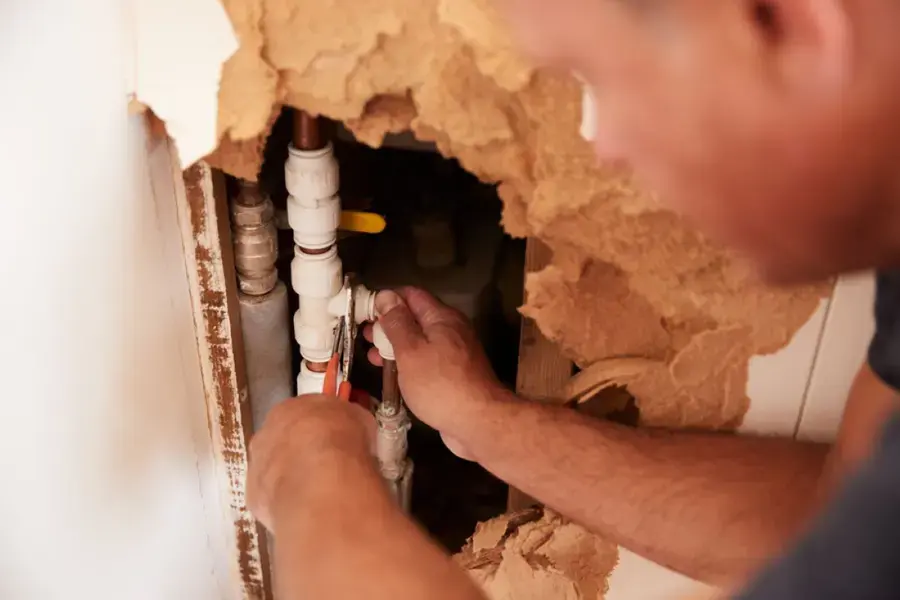
What to do when a pipe bursts inside the house in Garner
- Close the main Shut the main valve and open a low faucet to drain the pipes.
- Cut power below Turn off breakers for rooms where water is coming through the ceiling.
- Catch what drips Put buckets under drips and move furniture out of the path.
- Save the fitting Keep the failed piece of pipe or fitting and photograph it for the adjuster.
How burst pipe water damage is handled in Garner
Measured before anything is cut
The tech who does the walkthrough maps how far the water traveled into subfloor, baseboard, wall cavities and the crawl space, so the plan fits what is actually wet.
Dried as a whole structure
The drying team sizes air movers and LGR dehumidifiers to the class of loss and dries framing and cavities, not only the surfaces in view.
Logged for the adjuster
The restoration team keeps the moisture map, daily psychrometric readings and timestamped photos taken before any material comes out.
What does burst pipe water damage cost in Garner, NC?
In Garner, NC, burst pipe water damage typically runs $1,500 to $15,000. One wall caught early costs the least; water that reached ceilings, several rooms or the crawl space costs more.
One wall, caught early
- Extraction
- Baseboards off
- Cavity drying
Several rooms or a ceiling
- Drywall cut where wet
- Ceiling and joist drying
- Crawl space metering
Water through two floors
- Ceiling tear-out
- Subfloor drying
- Contents moved and protected
Ranges are typical, not a quote. Water category, square footage, material class and how fast drying started move the number most; the Garner water damage cost calculator gives a closer planning range.
The burst pipe water damage process in Garner, step by step
- 1
Moisture map
Thermal imaging traces where the water traveled.
- 2
Extraction
Standing water comes off floors and out of carpet.
- 3
Targeted removal
Only wet drywall, insulation and pad come out.
- 4
Cavity drying
Walls, ceilings and subfloor dry to the S500 goal.
Homes plumbed from the late 1970s to the mid 1990s may still have gray polybutylene supply pipe, which gets brittle with age and fails at the fittings. Older copper can pinhole, and newer PEX fails most often at crimp fittings and at fixtures. Pressure that runs high from the street adds stress to all of it.
Tracing the water without tearing out more than needed
The tech who does the walkthrough uses a thermal camera and pinless meters to follow water inside the wall, along the floor and into the ceiling below. Drywall comes out only where readings show it is wet, often a flood cut a short way up the wall or small access holes for drying the cavity.
- Baseboards pulled and wall bottoms vented
- Injection drying into wall cavities through small holes
- Cabinet toe kicks removed to dry under kitchens and baths
- Wet insulation inside outside walls removed
Ceilings and the floor below
A pipe that fails upstairs sends water down through the joist bays. Wet ceiling drywall that sags is taken down safely before it falls, and the joists are dried from below. In a single-story house, water that runs down the wall usually reaches the crawl space, so the framing under the house is metered too. See ceiling leak water damage for how that part is handled.
Records for the claim
A burst pipe is usually a sudden and accidental discharge, and the claim file shows it: photos of the failed fitting, the moisture map and daily readings. The North Carolina Department of Insurance explains how homeowners claims work in the state, and EPA WaterSense covers finding hidden household leaks.
Burst pipe water damage across Garner and nearby towns
The restoration team covers ZIP 27529 and the Garner edges of 27603 and 27610, from Historic Downtown Garner and White Oak to Timber Drive, Vandora Springs and the homes around Lake Benson.
Nearby coverage reaches Raleigh, Clayton, Knightdale, Fuquay-Varina, Cary.
Related water damage services in Garner
Burst Pipe Water Damage questions in Garner, NC
Why do pipes burst in Garner homes?
Mostly age and material. Polybutylene supply pipe gets brittle and fails at fittings, copper can pinhole, and PEX crimp fittings can let go. Hard freezes add frozen pipe failures in winter.
Does all the wet drywall have to come out?
No. Drywall wet with clean water can often be dried in place with small access holes and cavity drying. It comes out when it sags, swells or stays wet too long.
How long does a burst pipe take to dry?
Usually three to six days for a contained loss. Ceilings, hardwood and crawl space framing take longer, and equipment leaves when readings say dry.
Is a burst pipe covered by insurance?
A sudden pipe failure is usually treated as sudden and accidental, while a slow leak over months may not be. Coverage depends on your policy, so check with your own insurer.
Should the pipe be fixed before drying starts?
The source has to be stopped first, usually by shutting the valve. A plumber repairs the pipe, and drying can start alongside the repair.
What if water came through the ceiling?
Sagging ceiling drywall is taken down safely before it falls, the joist bay is dried and the insulation above is checked and removed if it is soaked.
Burst pipe in Garner? Start the dry-out now.
The restoration team traces the water with thermal imaging, opens only what is wet and dries the framing to a verified reading.
- Garner, NC and southern Wake County
- Every hour of every day