Structural Drying in Raleigh, NC
Water that is pumped out still leaves wood, drywall and concrete wet. Garner crews place air movers and dehumidifiers in Raleigh homes and record readings until every wet surface reaches a dry level.
(888) 578-4720Request Raleigh drying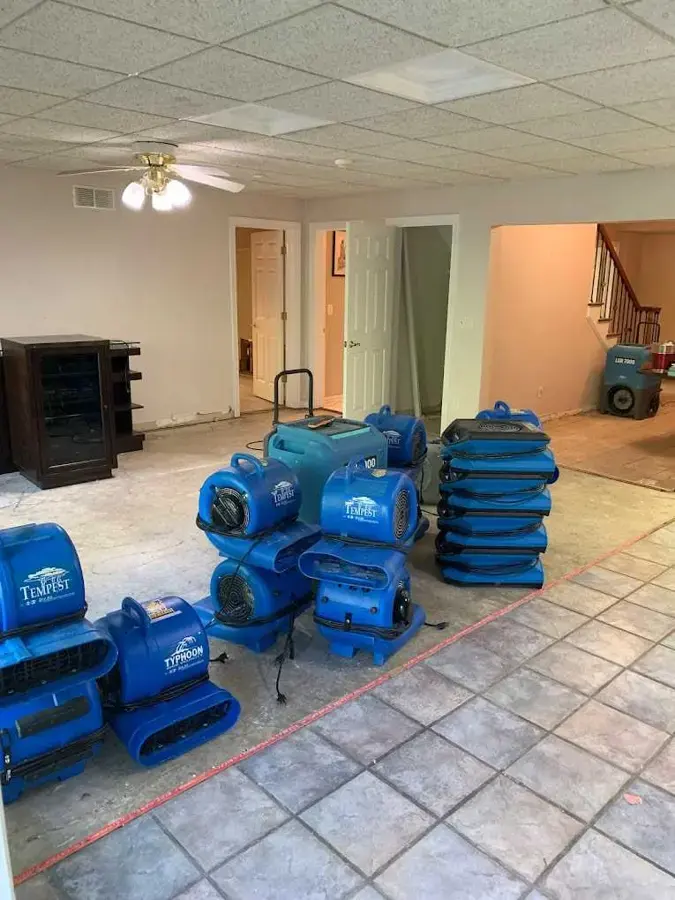
What to do when framing and subfloor stay wet in Raleigh
- Keep it running Leave the dryers on once they are set, since turning them off lets moisture settle back.
- Close doors Keep doors and windows shut near the drying area so the dry air stays inside.
- Save the readings Ask for a copy of the daily readings, which show progress.
- Hold the repairs Wait to replace flooring or paint until readings reach a dry level.
How structural drying and dehumidification is handled in Raleigh
Measured before anything is cut
The tech who does the walkthrough maps how far the water traveled into subfloor, baseboard, wall cavities and the crawl space, so the plan fits what is actually wet.
Dried as a whole structure
The drying team sizes air movers and LGR dehumidifiers to the class of loss and dries framing and cavities, not only the surfaces in view.
Logged for the adjuster
The restoration team keeps the moisture map, daily psychrometric readings and timestamped photos taken before any material comes out.
What does structural drying and dehumidification cost in Raleigh, NC?
Structural drying in Raleigh starts near $1,200 for one room and reaches $15,000 for Class 4 drying or most of a house. Number of rooms, material type and days of equipment are the main drivers.
One room, Class 1 or 2
- Air movers and one LGR
- Daily readings
- Three to five days
Several rooms or a crawl space
- Cavity and subfloor drying
- Multiple dehumidifiers
- Moisture map updates
Class 4 or most of a house
- Desiccant dehumidifiers
- Hardwood drying systems
- Extended monitoring
Ranges are typical, not a quote. Water category, square footage, material class and how fast drying started move the number most; the water damage cost calculator gives a closer planning range.
The structural drying and dehumidification process in Raleigh, step by step
- 1
Map
Meters and a thermal camera find where moisture sits.
- 2
Place
Air movers and dehumidifiers are set for each room.
- 3
Monitor
Readings are logged and equipment is adjusted.
- 4
Release
Equipment comes out when readings reach dry targets.
Drying is not guesswork. After extraction, a house still holds water inside studs, plywood, concrete and trim, and that moisture can warp wood and grow stains if it is left to evaporate on its own. Structural drying controls the air and the temperature so that moisture leaves the materials and gets captured, and readings show when it is done.
How the equipment works
Air movers push dry air across wet surfaces, and dehumidifiers pull the vapor out of the room so it does not settle somewhere else. LGR units handle most jobs, and desiccant units take over when the air is cold or the material is dense.
After storms in the Raleigh area
Hurricanes Dennis and Floyd in September 1999 helped bring over 21 inches of rain that month, and Hurricane Florence in September 2018 was the latest hurricane with a considerable effect on the Raleigh area. After storms like those, walls and subfloors need controlled drying.
What a drying job looks like
- Equipment placed after a moisture map
- Daily visits to log temperature and readings
- Equipment moved as wet areas shrink
- Final readings against a dry reference
Rooms with hardwood or thick subfloors take longer, and sealed cavities may need small holes so dry air can enter. Crawl spaces are handled in the same way, which is covered in crawl space water removal. Raleigh homes of every age, from Boylan Heights to Greystone Village, get the same plan: map the moisture, set the equipment and keep measuring until the numbers say stop.
Structural drying and dehumidification across Raleigh and nearby towns
Structural drying crews work across Raleigh, from Hayes Barton Historic District, Five Points and Moore Square to Brier Creek, Falls River and Greystone Village, as well as South Raleigh along US 401.
The same service nearby: structural drying and dehumidification in Garner, Knightdale, Cary.
Related water damage services in Raleigh
Structural Drying and Dehumidification questions in Raleigh, NC
How long does structural drying take?
Often three to five days for a single room, longer for hardwood, thick subfloors or several rooms. Daily readings show when the materials are dry, not a fixed schedule.
Why do dehumidifiers run along with air movers?
Air movers lift moisture off surfaces, and dehumidifiers remove it from the air. Without both, the water just moves around the room and ends up back in the materials.
Can wet drywall be dried in place?
Often, if the water was clean and the board is still firm. Swollen, stained or sagging board is cut out and the cavity behind it is dried.
Why is the equipment loud?
Air movers and dehumidifiers move a lot of air to pull moisture out. The noise is the price of faster drying, and it ends when readings are met.
How do I know the structure is dry?
Moisture readings from unaffected wood in the same house set a dry reference, and affected materials must match it before equipment is removed.
Walls still damp in Raleigh?
Garner crews set air movers and dehumidifiers, log readings each visit and remove the equipment only when the wood is dry.
- Garner, NC and southern Wake County
- Every hour of every day