Water Extraction and Removal in Clayton, NC
Standing water in a Clayton home does more harm the longer it stays. Crews pull it out with truck-mounted extraction, check the carpet pad and subfloor, and record every moisture reading before drying starts.
(888) 578-4720Call for Clayton extraction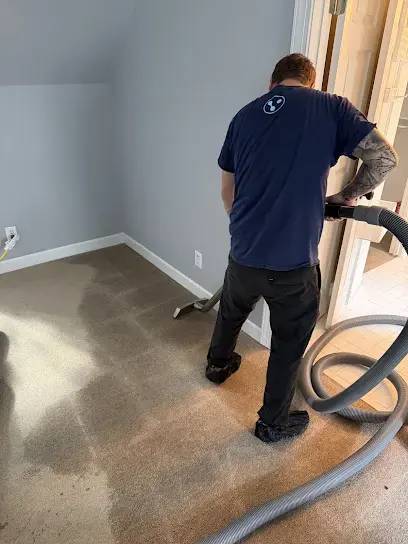
What to do when standing water covers the floor in Clayton
- Find the wet area Moisture meters and a thermal camera trace water well beyond the visible stain, under cabinets and along walls.
- Pull the water Truck-mounted extraction removes standing water from floors, stairs and carpet, followed by weighted passes.
- Check the pad The pad is lifted, tested and either dried in place or removed when it cannot be saved.
- Hand off to drying Readings are logged so the dryers start with a clear target and a record to compare against.
How water extraction and removal is handled in Clayton
Measured before anything is cut
The tech who does the walkthrough maps how far the water traveled into subfloor, baseboard, wall cavities and the crawl space, so the plan fits what is actually wet.
Dried as a whole structure
The drying team sizes air movers and LGR dehumidifiers to the class of loss and dries framing and cavities, not only the surfaces in view.
Logged for the adjuster
The restoration team keeps the moisture map, daily psychrometric readings and timestamped photos taken before any material comes out.
What does water extraction and removal cost in Clayton, NC?
Extraction in Clayton usually runs $500 to $1,800 for one room caught early, and climbs with depth, area and water type. Cost depends on how far the water spread and whether pad, drywall or crawl space framing also needs work.
One room, caught early
- Truck-mounted pumping
- Carpet and pad check
- Moisture readings
Several rooms or deep water
- Weighted carpet extraction
- Pad removed where needed
- Crawl space metered
Whole level or contaminated water
- Pumping and extraction
- Porous materials removed
- Antimicrobial and drying setup
Ranges are typical, not a quote. Water category, square footage, material class and how fast drying started move the number most; the water damage cost calculator gives a closer planning range.
The water extraction and removal process in Clayton, step by step
- 1
Inspection
Meters and photos record where the water went.
- 2
Extraction
Standing water is pumped and pressed out of floors and stairs.
- 3
Removal
Pad and other soaked materials that cannot be saved come out.
- 4
Handoff
Drying equipment is set against logged readings.
Water that reaches a floor spreads under baseboards, into carpet pad and along subfloor seams, so extraction is about speed and thoroughness together. In Clayton the cause might be a failed supply hose in Flowers Plantation, a leak in an older home in the Clayton Historic District, or river water after a storm. Crews begin by finding where the water went, not only where it landed.
What extraction covers in a Clayton home
Truck-mounted units pull far more water than household wet vacs, and weighted tools press it out of carpet and pad. Hard floors, stairs and cabinet bases get the same attention.
- Carpet and pad lifted and checked
- Hardwood and laminate surface water removed
- Baseboards and toe kicks opened where needed
- Readings taken before and after pumping
When floodwater is involved
Hurricane Matthew, Hurricane Florence and Tropical Storm Debby all brought flooding to the area, and Debby pushed the Neuse River over its banks in Johnston County. Floodwater carries soil and bacteria, so porous materials it touched are usually removed rather than saved, and the work is treated as contaminated water.
What happens after the water is out
Extraction is only the first stage. Once the puddles are gone, the crew maps what is still wet and sets air movers and dehumidifiers, linking the job to structural drying so it does not stop at a dry-looking floor. The crew explains which materials were removed and why, so the homeowner and the adjuster see the same picture.
Water extraction and removal across Clayton and nearby towns
Extraction crews work in Downtown Clayton, Flowers Plantation, Glen Laurel, Riverwood, Cleveland and Powhatan, and across the 27520 and 27527 ZIP codes, in older and newer homes.
The same service nearby: water extraction and removal in Garner, Knightdale, Raleigh.
Related water damage services in Clayton
Water Extraction and Removal questions in Clayton, NC
How much more water does a truck-mounted unit remove?
Far more than a household wet vac, because engine-powered suction pulls continuously from the floor. That speed matters when water is already moving into pad and subfloor.
Can wet carpet in Clayton be saved?
Often yes when the water was clean and extraction began early. Gray or contaminated water changes that, and the carpet pad is usually replaced either way.
Does extraction mean the house is dry?
No. Extraction removes liquid water, but moisture stays inside pad, framing and drywall. Dehumidifiers and air movers finish the job, guided by daily readings.
What if the water came from the Neuse River?
River floodwater is contaminated, so crews contain the area, remove porous materials and treat surfaces. The steps resemble a sewage job, with extra protection.
Is extraction needed for a small leak?
Even a dishwasher leak can leave water under flooring. A quick meter check shows whether pumping is needed or whether drying alone will do.
What should I move before the crew comes?
Lift small furniture, rugs and electronics out of the wet area if it is safe, and photograph anything damaged. Leave carpet and pad in place so readings stay accurate.
Get the water out of your Clayton home
Describe where the water came from and how deep it is, and the crew will bring the right extraction gear and moisture meters.
- Garner, NC and southern Wake County
- Every hour of every day