Crawl Space Water Removal in Clayton, NC
Water under a floor stays hidden while it soaks insulation, joists and subfloor. Where a Clayton home sits over a crawl space, crews pump it out, pull wet materials and dry the framing with logged readings.
(888) 578-4720Call about crawl space water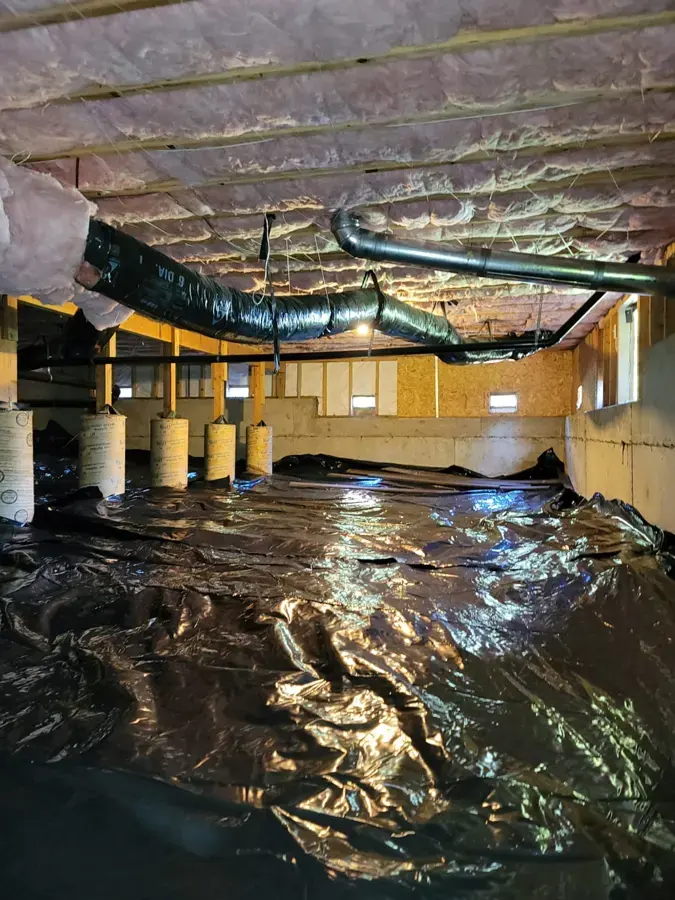
What to do when water collects in the crawl space in Clayton
- Inspect the space Crews check access, water depth and the likely source before anything is moved.
- Pump it out A submersible pump clears standing water, then damp spots are extracted by hand.
- Remove wet material Soaked insulation and a damaged barrier come out and are bagged.
- Dry the framing Dehumidifiers run until joist and subfloor readings reach dry targets.
How crawl space water removal is handled in Clayton
Measured before anything is cut
The tech who does the walkthrough maps how far the water traveled into subfloor, baseboard, wall cavities and the crawl space, so the plan fits what is actually wet.
Dried as a whole structure
The drying team sizes air movers and LGR dehumidifiers to the class of loss and dries framing and cavities, not only the surfaces in view.
Logged for the adjuster
The restoration team keeps the moisture map, daily psychrometric readings and timestamped photos taken before any material comes out.
What does crawl space water removal cost in Clayton, NC?
Crawl space work in Clayton generally runs $1,500 to $15,000, from a simple pump-out and drying up to storm water or sewage cleanup. Insulation, barrier damage, water type and drying time move a job between those ranges.
Pump-out and drying
- Water pumped to the exterior
- Dehumidifier placed
- Wood readings each day
Insulation and barrier out
- Wet batts cut and bagged
- Torn barrier taken out
- Joists and subfloor dried
Storm water or sewage
- Contaminated water cleanup
- Framing sanitized
- Complete dry-out
Ranges are typical, not a quote. Water category, square footage, material class and how fast drying started move the number most; the water damage cost calculator gives a closer planning range.
The crawl space water removal process in Clayton, step by step
- 1
Assess
Water depth, source and access are checked and recorded.
- 2
Pump
Standing water goes out through a submersible pump.
- 3
Remove
Wet insulation and damaged barrier are bagged.
- 4
Dry
Dehumidifiers run until wood readings are dry.
A crawl space collects water quietly. Heavy rain from Hurricane Matthew, Hurricane Florence or Tropical Storm Debby can leave low spots wet for days, and a leaking supply pipe or drain can add more. The people living above may notice only a musty smell or a cold, soft floor, which is why a meter check under the house matters.
What crews do under the floor
Crews enter in protective gear, set a submersible pump and trace where the water came from. Gray or sewage water changes the plan, because contaminated insulation and barrier must be bagged and removed.
- Standing water pumped to the exterior
- Wet batt insulation cut down and removed
- Torn or soaked vapor barrier replaced
- Joists and subfloor metered each day
Why wet wood matters
Wood framing holds moisture far longer than it looks. Dehumidifiers and air movers are sized to the space, and daily wood readings decide when drying ends, so the floors above do not cup, squeak or invite decay later.
Sewage and storm water in the crawl space
A sewer overflow after heavy rain in July 2026 sent about 1,000 gallons into Little Creek, a sign of how much water a heavy storm can move around town. If sewage or floodwater reaches a crawl space, the job is treated as Category 3 with containment, removal of porous materials, antimicrobial treatment on framing and a full dry-out. See storm and flood cleanup for the larger picture.
Crawl space water removal across Clayton and nearby towns
Crawl space crews work across Clayton, including Glen Laurel, Riverwood, Cleveland and Powhatan, as well as the streets near Flowers Plantation and homes in the 27520 and 27527 ZIP codes.
The same service nearby: crawl space water removal in Garner, Knightdale, Raleigh.
Related water damage services in Clayton
Crawl Space Water Removal questions in Clayton, NC
Is water under my Clayton house a real problem?
Yes, even when the floors feel normal. Wet insulation and joists keep the space damp, and moisture can rise into the floor above. A meter check shows how far it has spread.
Can crews pump a crawl space after storm rain?
Yes. A submersible pump removes standing water, but the source matters too, so crews also look for a leaking pipe, a cracked drain or runoff coming through the foundation.
Does wet insulation need to come out?
Usually. Batt insulation holds water against the subfloor, and drying it in place rarely works. Removal prevents sagging and lets the framing dry from every side.
How long does crawl space drying take?
Often several days, sometimes longer when the framing is soaked. Daily wood readings set the stopping point, not a fixed schedule or a guess.
What if the water came from a sewer overflow?
Contaminated water is handled as Category 3. Crews wear protective gear, remove porous materials, sanitize framing and document every step for the adjuster.
Will homeowners insurance pay for crawl space water?
Sudden pipe failures are often covered, while rising groundwater or floodwater usually needs separate coverage. Check with your own insurer and keep the crew's photos and logs.
Dry the space under your Clayton floor
Tell the crew what you saw or smelled under the house, and they will bring pumps, dehumidifiers and wood meters.
- Garner, NC and southern Wake County
- Every hour of every day