Structural Drying and Dehumidification in Cary
Cary's humid subtropical climate makes drying harder, so air movers, LGR dehumidifiers and daily moisture readings are used to dry framing, subfloors and wall cavities to a measured target once the visible water is gone.
(888) 578-4720Call about Cary structural drying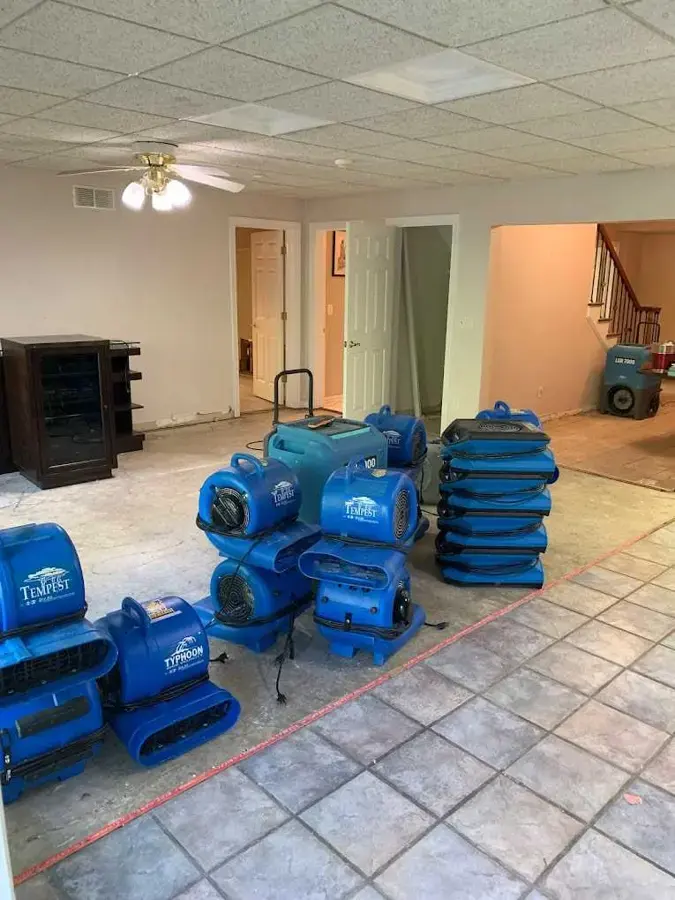
What to do when framing and subfloor stay wet in Cary
- Map the moisture A meter and thermal camera mark wet materials and set the dry reference.
- Place equipment Air movers and LGR dehumidifiers are sized to the rooms and materials.
- Monitor daily Readings are taken each visit and machines are repositioned.
- Confirm dry Equipment comes out once readings match the dry reference.
How structural drying and dehumidification is handled in Cary
Measured before anything is cut
The tech who does the walkthrough maps how far the water traveled into subfloor, baseboard, wall cavities and the crawl space, so the plan fits what is actually wet.
Dried as a whole structure
The drying team sizes air movers and LGR dehumidifiers to the class of loss and dries framing and cavities, not only the surfaces in view.
Logged for the adjuster
The restoration team keeps the moisture map, daily psychrometric readings and timestamped photos taken before any material comes out.
What does structural drying and dehumidification cost in Cary, NC?
Structural drying runs from $1,200 for one room to $15,000 for a Class 4 loss or most of a house, and the machine count, the days of drying and the material type set the price.
One room, Class 1 or 2
- Air movers and one LGR
- Daily readings
- Three to five days
Several rooms or a crawl space
- Cavity and subfloor drying
- Multiple dehumidifiers
- Moisture map updates
Class 4 or most of a house
- Desiccant dehumidifiers
- Hardwood drying systems
- Extended monitoring
Ranges are typical, not a quote. Water category, square footage, material class and how fast drying started move the number most; the water damage cost calculator gives a closer planning range.
The structural drying and dehumidification process in Cary, step by step
- 1
Inspection
Meters and a camera map wet materials and a dry reference.
- 2
Setup
Machines are placed wherever the map shows moisture.
- 3
Monitoring
Numbers are written down every visit while equipment is adjusted.
- 4
Completion
Machines come out when every material reaches target.
Pulling water out is only half of a water loss. What stays behind inside drywall, framing and subfloors keeps releasing moisture, and in a humid subtropical climate like Cary's the air already carries plenty of water. Structural drying controls that environment with dehumidification and airflow, then proves the result with readings, so mold and warped materials do not follow later.
Equipment and how it is placed
Air movers push dry air over wet surfaces, and LGR dehumidifiers pull the released moisture out of the room. The number of machines depends on the size of the area and the type of material, and equipment is moved as readings change.
- Air movers aimed at wet floors and walls
- LGR dehumidifiers sized to the room
- Desiccant units for dense materials
- Daily moisture map updates
Hardwood, subfloors and wall cavities
Dense materials dry slowly. Hardwood floors may need panels and heat drying, wall cavities often need small access holes or removed baseboards, and subfloors under flooring have to be metered at several points. Class 4 materials like hardwood, plaster and concrete take the most patience, and desiccant dehumidifiers help. Most jobs begin with water extraction.
How drying is verified
Readings are recorded at the same spots on each visit and compared against an unaffected part of the home, then written into the job file. Equipment stays until the numbers match, which is why the drying period varies from a few days to much longer. The same record gives an adjuster proof that the structure was properly dried.
Structural drying and dehumidification across Cary and nearby towns
Structural drying is provided across Cary, from Preston, Amberly, Lochmere and The Highlands to Farmington Woods, Greenwood Forest and Kildaire Farms, using the same readings based method everywhere.
The same service nearby: structural drying and dehumidification in Garner, Raleigh, Fuquay-Varina.
Related water damage services in Cary
Structural Drying and Dehumidification questions in Cary, NC
Why is drying needed once the water is gone?
Water soaks into drywall, framing and subfloors, and it keeps releasing humidity into the room. Without controlled drying, materials warp and mold can start.
How many days does drying take?
Many jobs run several days, while hardwood, plaster, concrete and large losses can run longer. The readings decide when the equipment leaves.
Does humid weather make drying harder?
Yes. Cary's humid subtropical climate means the air holds water already, so dehumidifiers matter as much as fans, and doors and windows stay closed during drying.
Why are machines loud and left running?
Air movers and LGR dehumidifiers have to run continuously to keep humidity low. The noise and power use last only while the structure dries.
Can hardwood floors be dried in place?
Often when caught early, using drying panels and careful airflow, though cupped or buckled boards sometimes cannot recover. Meters track the moisture content throughout.
How is a job proven dry?
Final readings at the original test spots match those of unaffected materials, and the log from every visit is saved for the insurer.
Water gone but still damp?
Machines are matched to the rooms, readings are logged at each visit and the job closes only when the numbers say dry.
- Garner, NC and southern Wake County
- Every hour of every day