Water Extraction and Removal in Raleigh, NC
When water is standing on the floor, the first job is getting it out. Garner crews bring truck-mounted pumps and weighted extractors into Raleigh homes, then take readings to find out how far the water traveled.
(888) 578-4720Request Raleigh water removal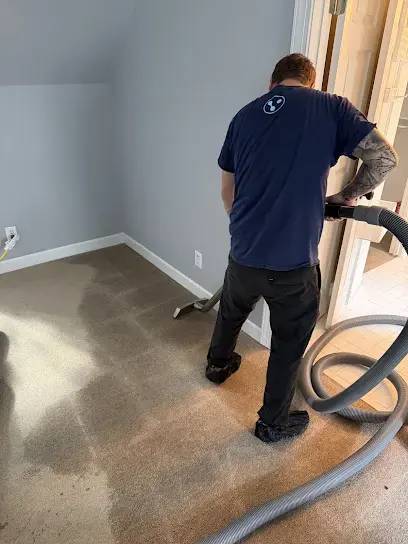
What to do when standing water covers the floor in Raleigh
- Stop the source Close the supply valve or the main if water is still running, and stay clear of wet outlets.
- Call early Pad and subfloors absorb more the longer water sits, so an early call limits tear out.
- Lift small items Move rugs, books and boxes onto dry furniture so they stop wicking water.
- Take photos Photograph the water and damaged items before anything moves, since the insurer will ask.
How water extraction and removal is handled in Raleigh
Measured before anything is cut
The tech who does the walkthrough maps how far the water traveled into subfloor, baseboard, wall cavities and the crawl space, so the plan fits what is actually wet.
Dried as a whole structure
The drying team sizes air movers and LGR dehumidifiers to the class of loss and dries framing and cavities, not only the surfaces in view.
Logged for the adjuster
The restoration team keeps the moisture map, daily psychrometric readings and timestamped photos taken before any material comes out.
What does water extraction and removal cost in Raleigh, NC?
Raleigh extraction jobs usually run from $500 to $1,800 for one room caught early, up to $4,500 for several rooms, and as high as $9,000 when the whole level or contaminated water is involved. Final cost depends on depth, area and what must be removed.
One room, caught early
- Truck-mounted extraction
- Carpet and pad check
- Moisture readings
Several rooms or deep water
- Weighted carpet extraction
- Pad removal where needed
- Crawl space metering
Whole level or contaminated water
- Pumping and extraction
- Porous material removal
- Antimicrobial and drying setup
Ranges are typical, not a quote. Water category, square footage, material class and how fast drying started move the number most; the water damage cost calculator gives a closer planning range.
The water extraction and removal process in Raleigh, step by step
- 1
Assessment
Moisture meters trace the water past the visible edge.
- 2
Extraction
Truck-mounted units and weighted tools remove standing water.
- 3
Removal
Pad and swollen materials that cannot dry in place are cut out.
- 4
Drying
Air movers and dehumidifiers are set and checked each visit.
Standing water in a Raleigh home does not wait. Carpet pad holds it like a sponge, subfloors soak it up, and the longer it sits the more material has to come out. Water extraction is the first job on most calls: pump or vacuum the bulk of it away, then measure what the structure still holds so drying can start with real numbers.
Why speed matters in Raleigh
Hurricane Fran in September 1996 did most of its damage through falling trees, and Hurricane Florence in September 2018 is the latest storm to leave a considerable mark on the Raleigh area. Late summer and early fall storms can still push water into garages, ground floors and crawl spaces.
What happens on site
- A truck-mounted unit pulls the bulk of the water outside
- Weighted tools press water out of carpet and pad
- Pad is removed when it cannot dry in place
- Meters mark where the wet area ends
Most calls start in a kitchen, a laundry room or a garage, but the work does not stop at the surface. Water moves under baseboards and into wall bottoms, so readings are taken well past the visible edge.
After the pumps go quiet
Extraction removes what can be pulled out. It does not dry framing, drywall or concrete. Air movers and LGR dehumidifiers take over from there, and readings are logged each visit until the wood matches a dry reference. Structural drying is the second stage, and crawl space water removal applies when the water went under the floor.
Across Raleigh neighborhoods
Crews work older streets inside the Beltline like Historic Oakwood and Boylan Heights as well as Brier Creek and Stonebridge. The age of the house changes where the water hides, but the pump-out comes first in every one.
Water extraction and removal across Raleigh and nearby towns
Extraction crews work across Raleigh, from Historic Oakwood and Five Points to Brier Creek and Falls River, and into Southeast Raleigh along Rock Quarry Road, Poole Road and New Bern Avenue.
The same service nearby: water extraction and removal in Garner, Knightdale, Cary.
Related water damage services in Raleigh
Water Extraction and Removal questions in Raleigh, NC
How is water extracted from a Raleigh home?
A truck-mounted unit pulls water through a hose from the floor, while weighted tools press it out of carpet. Pad is often cut out, and meters then show how much remains in the subfloor.
Can wet carpet be saved after extraction?
Often yes, if the water was clean and extraction began early. Carpet is lifted, pad is replaced, and the carpet is dried on racks or in place. Sewage or long soaking usually means replacement.
Does extraction replace drying?
No. Extraction removes liquid water only. Framing, drywall and concrete still hold moisture afterward, so dehumidifiers and air movers run until readings reach a dry standard.
What if a hurricane or storm put the water there?
Storm water carries soil and contaminants, so it is treated differently from a broken supply pipe. Cleanup includes antimicrobial treatment, and storm and flash flood cleanup covers that work.
Will the insurer want proof of the damage?
Usually. Photos taken before anything moves, readings from the crew and a list of removed materials make a claim easier to document. Sudden leaks and flood water are often handled differently, so check with your own insurer.
Water on the floor in Raleigh?
Garner crews bring truck-mounted pumps and moisture meters to Raleigh homes and can talk through the steps over the phone before anyone comes out.
- Garner, NC and southern Wake County
- Every hour of every day