Crawl Space Water Removal in Knightdale, NC
Water under a floor is easy to miss and slow to leave. Crews pump the crawl space, pull wet insulation and dry the joists and subfloor, with readings that show when the wood is truly dry.
(888) 578-4720Request crawl space help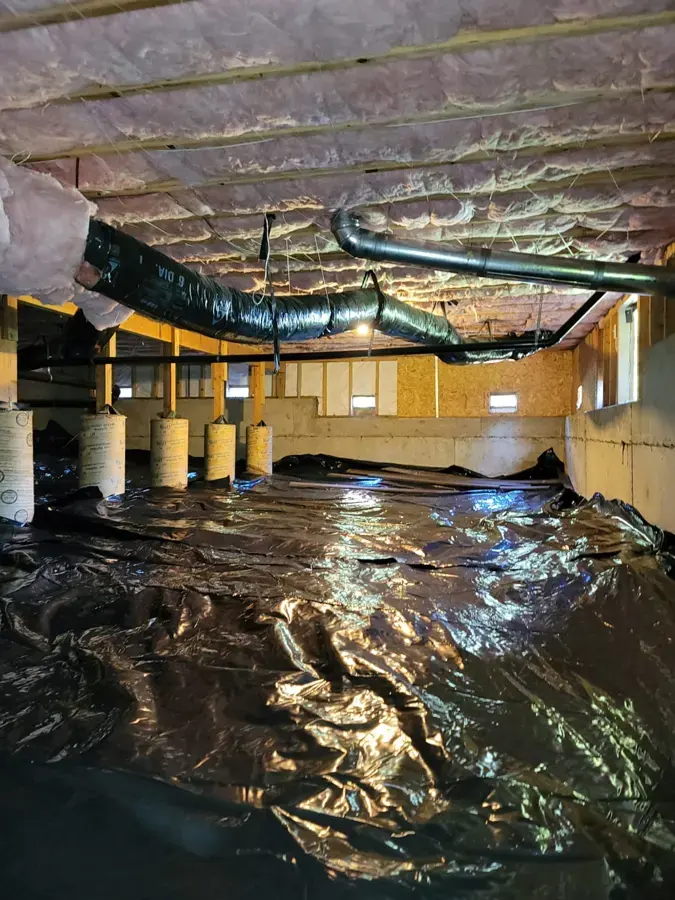
What to do when water collects in the crawl space in Knightdale
- Find the water source Check for rain entry, a leaking pipe or an AC drain feeding the space.
- Pump the standing water Submersible pumps drop the level, and dirty water is contained first.
- Remove wet materials Soaked insulation and a damaged vapor barrier come out of the space.
- Dry and monitor Dehumidifiers and air movers run while wood readings are logged at each visit until dry.
How crawl space water removal is handled in Knightdale
Measured before anything is cut
The tech who does the walkthrough maps how far the water traveled into subfloor, baseboard, wall cavities and the crawl space, so the plan fits what is actually wet.
Dried as a whole structure
The drying team sizes air movers and LGR dehumidifiers to the class of loss and dries framing and cavities, not only the surfaces in view.
Logged for the adjuster
The restoration team keeps the moisture map, daily psychrometric readings and timestamped photos taken before any material comes out.
What does crawl space water removal cost in Knightdale, NC?
Crawl space water removal in Knightdale typically runs from $1,500 to $15,000. A simple pump-out sits at the low end, while soaked insulation, storm water or sewage and a large footprint push the cost toward the top.
Pump-out and drying
- Standing water pumped
- LGR dehumidifier setup
- Daily wood readings
Insulation and barrier out
- Wet insulation removed
- Damaged barrier removed
- Joist and subfloor drying
Storm water or sewage
- Category 3 cleanup
- Antimicrobial on framing
- Full crawl space dry-out
Ranges are typical, not a quote. Water category, square footage, material class and how fast drying started move the number most; the water damage cost calculator gives a closer planning range.
The crawl space water removal process in Knightdale, step by step
- 1
Inspection
Meters and a camera find where the water sits and how far it spread.
- 2
Pumping
Submersible pumps clear the standing water from the space.
- 3
Removal
Wet insulation and a damaged barrier come out.
- 4
Drying
Dehumidifiers and air movers run until wood reads dry.
A crawl space holds water quietly. Rain that finds its way under the house, a failed drain or a leaking pipe can leave standing water and soaked insulation for days before anyone looks. In Knightdale, a town stormwater assessment on Breckenridge Drive recorded heavy flooding in one property's crawl space, a reminder that hard storms and weak drainage can reach the space beneath a floor.
Pumping first, then the wet materials
Submersible pumps move the standing water out, then wet insulation and damaged vapor barrier are pulled so they stop holding moisture against the framing. Storm water or sewage in the space is treated as contaminated, so protective gear, containment and an antimicrobial step come first. See storm and flash flood cleanup for that case.
What gets measured and dried
Joists, sill plates and the subfloor hold water long after the puddles are gone. Moisture meters check the wood each visit, and LGR dehumidifiers run until the readings match dry standards.
- Standing water depth and where it enters
- Insulation soaked or compressed
- Vapor barrier torn or pooled with water
- Wood readings on joists and subfloor
Humidity, summers and the rest of the house
Knightdale summers are hot and humid, and July and August are the rainiest months, so a damp crawl space can stay wet unless dehumidifiers run and the source is found. Drying the space also protects the floors above, which is why structural drying often runs alongside the pump-out. A condensate drain from an air handler is another common source, covered on the AC and HVAC condensate leak page.
Crawl space water removal across Knightdale and nearby towns
Crawl space water crews serve all of Knightdale, including Old Town, Knightdale Station, Planters Walk, Mingo Bluff, Creekview Crossing, Widewaters and addresses along Knightdale Boulevard, in ZIP code 27545.
The same service nearby: crawl space water removal in Garner, Raleigh, Clayton.
Related water damage services in Knightdale
Crawl Space Water Removal questions in Knightdale, NC
Can standing water in a crawl space wait?
It should not. Water soaks insulation and wood, humidity rises in the space, and the longer it sits the more material has to come out and the longer drying takes.
What causes water to collect under a house?
Heavy rain that overwhelms drainage, a leaking supply or drain pipe, or a condensate drain from an air handler can all send water under the floor. A crew traces the source before drying.
Does wet insulation have to be removed?
Usually yes. Soaked batts sag, hold water against the subfloor and lose their insulating value, so they are removed and replaced after the framing has dried.
Is a flooded crawl space a sewage problem?
Not always, but storm water and sewage are both treated as contaminated. That means protective gear, containment and an antimicrobial treatment, and a sewer backup should also be reported to Raleigh Water Customer Care.
How long does a crawl space take to dry?
Many take several days, and humid summers can stretch that. Daily readings on joists and subfloor decide when the equipment leaves, not a set schedule.
Will mold form in a wet crawl space?
It can if damp conditions last, since wood and insulation give it something to feed on. Fast pump-out, removal of soaked materials and steady dehumidification are the best way to stop it.
Dry out the space beneath your home
A wet crawl space keeps feeding humidity into the floors above. Call a Knightdale crew and the pump-out and drying get planned from readings.
- Garner, NC and southern Wake County
- Every hour of every day