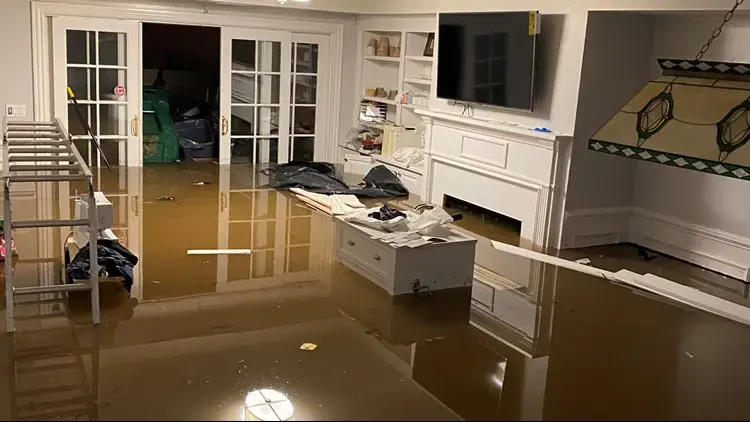
The Neuse River runs along the edge of Clayton, and when a tropical system dumps rain on the region, the river and the creeks that feed it can leave their banks. A homeowner whose house takes on that water faces a different job than one with a burst pipe.
Key takeaways
- Hurricane Matthew in 2016, Hurricane Florence in 2018 and Tropical Storm Debby in 2024 all brought flooding to the Clayton area.
- Flood water is treated as contaminated, so it calls for protective gear, containment and removal of porous materials.
- Keep the power off in any room where water has reached outlets, and stay out of standing water.
- Flood damage and sudden interior leaks are often covered differently, so ask the insurer early and keep photos.
- Drying starts only after the standing water and ruined materials are out.
How river and storm water reaches a Clayton home
Clayton sits in the Neuse River basin, and the town limits extend northeast to the river and beyond. The river is not the only way water arrives.
Neuse River overflow
Hurricane Matthew in October 2016 brought major Neuse River flooding to Clayton. In August 2024, Tropical Storm Debby pushed the Neuse over its banks in Johnston County, and the town closed flooded sections of the greenway.
Roads, creeks and storm runoff
A NOAA gauge on the Neuse River near Clayton notes that NC 42 floods and that floodwater can approach the entrance of East Clayton Elementary School. Hurricane Florence in 2018 caused severe flooding, road closures and long power outages across inland North Carolina, according to the Clayton Fire Department.
Safety before cleanup
Flood water carries sewage, soil and chemicals, so the first rules are about not touching it. Power is the other risk.
- Leave the house if water is rising or the power is still on in a wet room.
- Do not wade through flood water, and keep children and pets out of it.
- Wear boots, gloves and a mask if a quick entry is unavoidable.
- Do not run a vacuum or space heater near standing water.
- Wait for an electrician to check the panel before restoring power to wet circuits.
The first day, step by step
Once it is safe to enter, the goal is to document, protect and call for help in that order.
- Take wide and close photos of the high-water mark on walls, the floor and damaged contents.
- Lift valuables, papers and electronics onto dry surfaces.
- Note the date and approximate depth of water, in the homeowner's own words.
- Contact the insurer to start a claim and ask what flood coverage exists.
- Call a crew for storm and flash flood cleanup so removal can start while the water is still fresh.
What to tell the crew and the insurer
Give the crew a short history: when the water arrived, how high it rose, whether it came from the river, a creek or runoff, and whether power was off. That detail decides how much has to come out.
The insurer will want the same facts, plus the photos and the list of damaged contents.
What flood cleanup removes
The standard is simple: if flood water soaked it and it is porous, it usually goes. That includes carpet, pad, lower drywall and insulation that cannot be cleaned.
Crews use water extraction to remove the bulk of the water, then make flood cuts above the wet area on drywall. Hard surfaces are cleaned and treated with an antimicrobial.
Garages, sheds and outbuildings
Water often reaches a garage or shed first. Fuel, paint, fertilizer and tools that sat in flood water can leak or spoil, so handle them with gloves and keep them away from children and pets.
Drying in a humid subtropical climate
Clayton has a humid subtropical climate, and that matters when a house is wet. Humid air slows drying and gives mold a head start.
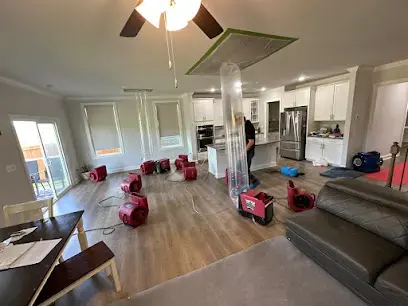
Structural drying uses dehumidifiers and air movers sized to the space, with readings repeated until framing and subfloor reach a normal range. Rushing the finish work before that point is how problems come back.
Why humidity makes a flooded house harder to dry
Outdoor humidity stays high for long stretches in Clayton, so doors and windows alone cannot dry a flooded house. Dehumidifiers pull water out of the air and the materials, and readings show when the framing is ready for repair.
Contents, older homes and newer homes
Flood cleanup is not only about the structure. What was on the floor, in a closet or in a garage matters just as much, and the age of a house changes what has to come out.
Furniture, electronics and papers
Soft items that soaked in flood water, such as upholstery, mattresses and rugs, are usually not worth saving. Hard furniture can often be cleaned and dried, and papers can sometimes be frozen and dried by a specialist if they matter.
- Photograph and list every item before it is moved or thrown out.
- Keep a sample of flooring and carpet if the insurer asks for it.
- Do not turn on wet electronics, and keep appliances unplugged until they are checked.
Historic district and newer homes
The Clayton Historic District has almost 300 historic homes and buildings, and older construction can hide water in plaster, old subfloors and layered finishes. Newer homes in places such as Flowers Plantation, Glen Laurel and Riverwood have modern drywall and flooring, which tend to come out in larger sections once wet.
Signing up for local alerts
The Clayton Outage and Messaging System sends electric and water outage alerts, and signing up before a storm helps a household know when water or power is affected. After a tropical system, a boil-water advisory or low pressure can follow, so check town notices before using tap water.
Insurance and records
Many homeowner policies treat rising flood water differently from a sudden leak inside the house. The wording matters, so ask the insurer what applies and whether a separate flood policy is in force.
Keep every receipt, the photos and a list of removed items. The Clayton water damage page covers the other services crews offer in town.
Questions
How soon should flood cleanup start?
As soon as it is safe to enter. Wet drywall, carpet and insulation start to break down and hold moisture quickly.
Can carpet be saved after river flood water?
Usually not. Flood water is contaminated, and carpet and pad are porous, so they are normally removed.
Is it safe to stay in a house after a flood?
Not until the power is checked and the contaminated material is out. Leave if water is rising or the house smells of sewage.
Does Clayton warn residents about flooding?
The town runs the Clayton Outage and Messaging System for electric and water alerts. It also closes flooded greenway sections during river overflow.
Will insurance cover a flooded home?
It depends on the policy. Flood water is often handled under separate coverage from sudden interior leaks, so ask the insurer before work begins.
What if the water reached the garage but not the house?
A wet garage still needs extraction and drying, since water can wick into walls and pass under doors. Check the walls shared with living space before calling it dry.