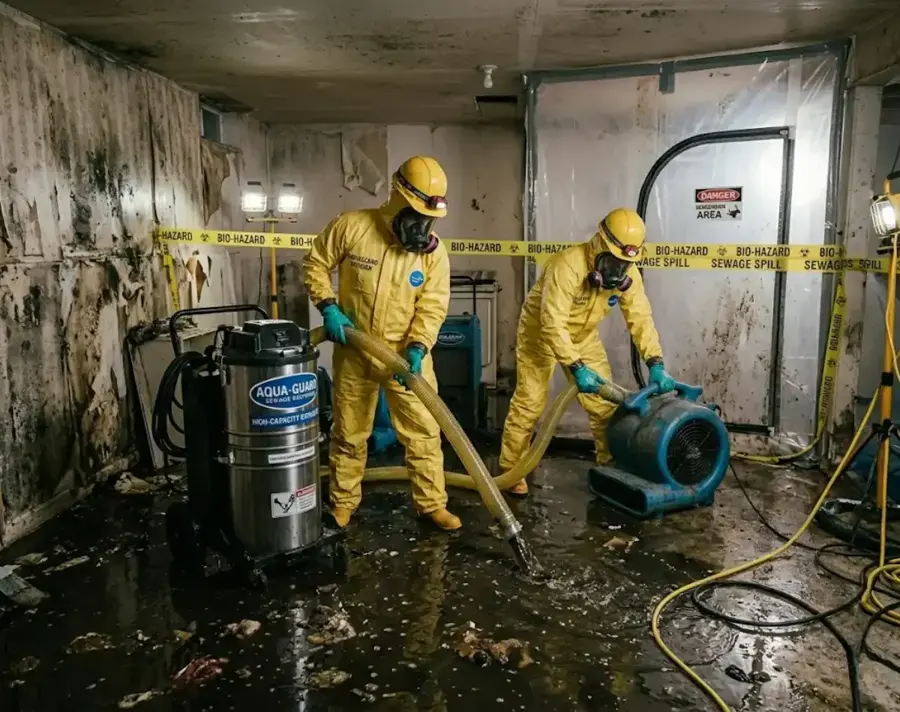
When sewage comes up a floor drain or toilet, the first question is usually whose problem it is. In Raleigh and Knightdale the answer splits between the city and the property owner, and knowing where the split falls saves time.
Key takeaways
- Raleigh Water handles breaks in water and sewer mains in the street, and the property owner handles breaks on private property.
- Raleigh says most sewer backups occur between the house and the city sewer main, which is the private sewer lateral.
- Grease, tree roots and flushable wipes are the causes Raleigh names most often.
- A backwater valve may be worth asking about if the lowest floor sits lower than the closest upstream manhole.
- Sewage is contaminated water, so cleanup is handled with containment and protective gear, not a mop.
Who owns which part of the sewer system
Raleigh Water provides water and wastewater service to Raleigh, Garner, Wake Forest, Rolesville, Knightdale, Wendell and Zebulon. In Knightdale, the town merged its water and sewer system with the City of Raleigh, and Raleigh Water operates the public water and sewer mains there.
What Raleigh Water handles
Raleigh is responsible for breaks in water and sewer mains in the street. Customers can report sewer backups, overflows and water leaks to Raleigh Water Customer Care.
What the property owner handles
Property owners maintain the sewer lateral, the pipe from the home to the point where it connects to the city sewer main. Raleigh advises asking a plumber to clear a blockage all the way to the city main, not just past the first obstruction.
Why backups happen
Raleigh points to a short list of repeat causes, and most of them start inside the home or yard.
- Grease poured down kitchen drains that hardens in the pipe
- Tree roots that work into joints in the private sewer lateral
- Flushable wipes, which do not break down the way toilet paper does
- A blockage in the city main, which Raleigh Water would handle
Floor drains and lower levels
In homes with a lower level, a floor drain or lower-level bathroom is usually the first place sewage appears, since it sits closest to the pipe. Keep stored items off the floor in those rooms.
Backwater valves and low floors
A backwater valve is a gravity check valve on the private sewer pipe. It lets waste flow out and closes if sewage tries to flow back toward the house.
A home likely needs one if its lowest floor is lower than the closest upstream manhole. That is a question for a plumber, who can check the elevation and the existing pipe.
- Lower-level bathrooms and floor drains are the usual first places sewage appears.
- A valve needs periodic checks to work when it is needed.
- Installing one is plumbing work, separate from any cleanup.
What to do when sewage comes up
The first steps are about safety and keeping contamination from spreading.
- Stop using sinks, tubs, toilets and the washer so no more water enters the pipe.
- Keep children and pets out of the affected room.
- Do not walk through the water or run a standard vacuum over it.
- Photograph the area before anything is moved.
- Report the backup to Raleigh Water Customer Care, then call a plumber to find where the blockage sits.
What a sewage cleanup involves
Sewage falls into the Category 3 class of water, which means it is treated as contaminated. A sewage backup cleanup uses containment, protective equipment and an antimicrobial treatment after the water is removed.
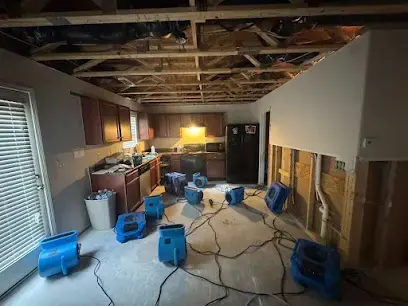
Porous materials such as carpet, pad and wet drywall are usually removed rather than saved. Hard floors can often be cleaned in place.
Local crews serve Raleigh and Knightdale with the same process.
After the water is out
A plumber should clear and check the pipe before cleanup is finished, since a second backup would wet the same materials again. Ask for the finding in writing and share it with the cleanup crew and the insurer.
Reading the warning signs before a full backup
A sewer backup rarely arrives without hints. A few small changes in how the house drains can warn of a blockage before sewage reaches the floor.
What a partial blockage looks like
Slow drains in more than one fixture are the clearest sign. A single slow sink usually means a local clog, but a tub, a toilet and a floor drain all draining slowly points toward the main sewer pipe.
- Gurgling from a drain when another fixture runs
- A toilet that bubbles when the washer drains
- Sewer odors near a floor drain or on a lower level
- Water that rises in a tub when the toilet is flushed
Roots, grease and wipes in practice
Tree roots tend to work into joints in the private sewer pipe over many years, which is why mature yards in both Raleigh and Knightdale are worth a camera inspection. Grease builds up more quickly, especially in kitchens that rinse pans with hot water.
Flushable wipes are the easiest cause to prevent. Raleigh names them directly, and they do not break down the way toilet paper does.
Why clearing only the first blockage can fail
A plumber who clears the blockage only partway can leave a second one further down the pipe. That is why Raleigh advises clearing all the way to the city main, and why asking for a camera look afterward is reasonable.
Drying and the paperwork
After the contaminated material is out, the structure still has to dry. Crews set dehumidifiers and air movers, then repeat moisture readings until the framing and subfloor are in a normal range.
Keep the plumber's finding, the date and the photos together. If the blockage was in the private pipe, the owner's policy decides whether any of the cost is covered, so ask the insurer about sewer backup coverage before work begins.
The main Raleigh service page lists the other water services in the area.
Questions
Who do I call first when a sewer backup happens?
Report it to Raleigh Water Customer Care so the city can check its main, and call a plumber to find the blockage. Raleigh says most backups are between the house and the main.
Is the sewer lateral my responsibility?
In Raleigh, property owners maintain the pipe from the home to the point where it connects to the city sewer main. The city is responsible for the main in the street.
Does Knightdale use the same system?
Yes. Knightdale merged its water and sewer system with the City of Raleigh, and Raleigh Water operates the public pipes in town.
Can I clean sewage myself?
Small surface spills on hard floors can be handled with care, but a backup that reaches carpet, drywall or a large area should be left to trained crews. The water carries bacteria.
How do I keep it from happening again?
Keep grease out of drains, flush only toilet paper and ask a plumber about a camera inspection of the private pipe and about a backwater valve.
What does a plumber look for with a camera?
A camera shows roots, cracks, sags in the pipe and grease buildup. It also confirms the blockage is cleared all the way to the city main.