Older Cary subdivisions such as Farmington Woods, Greenwood Forest and Kildaire Farms were planned around preserved trees, and the mature conifers and broadleaf trees are a big part of their appeal. They are also part of the story when a storm opens a roof and a stain spreads across a ceiling.
Key takeaways
- Tropical systems usually reach Cary after weakening over land, but they can still bring heavy rain and wind, and summer thunderstorms do the same.
- A ceiling stain that grows after rain and stops on dry days points to the roof, while one that appears on dry days points to plumbing or an air handler.
- Check the attic and the ceilings below it before the next storm arrives.
- Wet insulation and drywall are usually removed, since they hold water against framing.
- Photos taken before anything is dried help with a storm claim.
Reading a ceiling stain
A stain is a clue, not a diagnosis. Its shape, timing and spread help separate a roof leak from other sources.
Signs that point to the roof
Roof water tends to appear during or just after rain, and the stain often sits below an exterior wall, a vent or a chimney.
- A brown ring that darkens each time it rains
- Dripping that stops when the rain stops
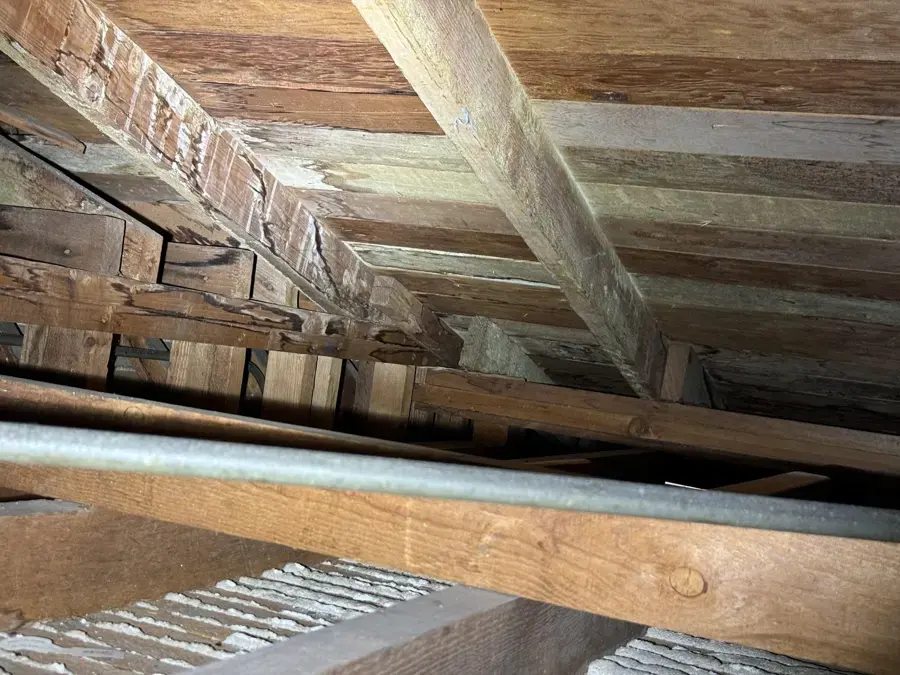
- Wet insulation in the attic directly above the stain
Signs that point elsewhere
A stain that shows up on a dry, sunny day often comes from plumbing above, or from a clogged condensate drain on an air handler in the attic. Knowing the difference saves a roofer an unnecessary visit.
Why older, shaded subdivisions need a closer look
Cary is mostly suburban development from the 1960s onward. Neighborhoods with preserved trees, including Farmington Woods, Greenwood Forest and Kildaire Farms, carry limbs and leaf litter that can scrape shingles and clog gutters.
Hurricane Fran in September 1996 did great damage in the Raleigh and Cary area, a reminder of what a strong system can do. Tropical cyclones can reach Cary, usually after weakening over land, and summer thunderstorms test roofs every year.
Summer storms and everyday wear
Not every leak comes from a named storm. A summer thunderstorm with strong wind can lift a shingle edge, and repeated heat and cold wear away sealant at vents and flashing over time.
After a storm: what to check
A quick walk through the house and attic once the weather clears can catch a small leak before it becomes a large one.
- Look at ceilings in the top floor rooms, hallways and closets for new stains or sagging.
- Check the attic with a flashlight for dark insulation, damp rafters or daylight.
- Walk the yard for shingles, branches and exposed flashing.
- Look at gutters and downspouts for debris and overflow marks on the siding.
- Check around vents, skylights and chimneys, where leaks often start.
What to do about a wet ceiling
If a ceiling is dripping or bulging, the priority is to limit damage and stay safe. Water in a ceiling can also reach light fixtures and wiring.
- Put a bucket under the drip and move furniture out of the way.
- Switch off power to the room if water is near a fixture or fan.
- Ask a roofer to tarp or patch the opening, since a dry ceiling cannot be built under an open roof.
- Photograph the stain, the attic and the roof damage.
- Contact the insurer about storm coverage.
When a roofer cannot come right away
After a widespread storm, roofers book up quickly, and a temporary cover may be all that is available for a few days. A tarp secured over the damaged area slows the water, but climbing onto a wet or windy roof is dangerous and is best left to someone trained.
Inside, keep the bucket emptied, move insulation and belongings out of the drip path and open interior doors so air can move through the wet room.
Drying wet insulation, drywall and framing
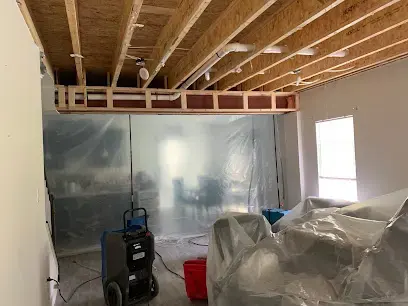
Roof water is usually clean when it enters, but it collects dust and insulation fibers on the way down. A roof leak water damage visit starts with moisture readings to find the full wet area.
Soaked insulation is removed, and drywall that has sagged or stayed wet is cut out. A ceiling leak job then dries the joist bays and any wall cavities the water reached, with dehumidifiers and air movers matched to the space.
Why wet insulation is not left to dry
Insulation that has been soaked loses most of its value and can hold water against rafters and drywall for a long time. In Cary's humid subtropical summers, that moisture has little chance of leaving on its own.
Removing it early lets the framing dry faster and keeps the ceiling repair simple.
Older houses, attached homes and shared roofs
Not every Cary roof looks like a ranch with a few oaks beside it. The mix of housing changes who to call and how a leak travels.
The Cary Historic District
The Cary Historic District, two blocks south of downtown, holds houses from the 19th and early 20th centuries. Older roofs, chimneys and flashing details are common there, and old framing can hide water for a long time before a stain appears.
Attached homes and duplexes
The Town of Cary has been approving townhouses and duplexes, including a 2020 hearing for a small project near Green Level High School. In attached homes, a roof leak next door can wet a shared wall, so tell neighbors and the association quickly.
Two-story homes and upper floors
In a two-story house, a roof leak can reach the upper ceiling first and then drip into a room below. Check both floors, and look inside closets and along the tops of walls where stains hide.
Keeping the claim and the repair on track
The roof repair and the water cleanup are separate jobs and usually separate invoices. Keep both, along with the photos and the date of the storm.
The Cary water damage page lists the other services available in town, and the main roof leak service page explains the process in more detail.
Questions
How long can a roof leak wait before it causes damage?
Damage starts as soon as insulation and drywall are wet. A small leak caught early is far cheaper to dry than one left for weeks.
Should a bulging ceiling be popped?
A small hole can let trapped water drain into a bucket and relieve pressure on the drywall. Stay clear of light fixtures and call for help if the bulge is large.
Do trees near the house increase roof risk?
Limbs can scrape shingles, drop debris and clog gutters, and a fallen limb can open a roof. Trimming is a decision for an arborist.
Is roof leak water considered contaminated?
Usually it is clean when it enters, but it can pick up dirt on the way through. Wet insulation is typically removed.
Does storm damage have to be reported right away?
Policies often set time limits for reporting. Contact the insurer soon after the storm and keep your photos.
Who handles a roof leak in an attached townhome?
It depends on how the roof is owned and maintained, which an association or deed usually spells out. Tell the association early and call a crew to dry the unit.