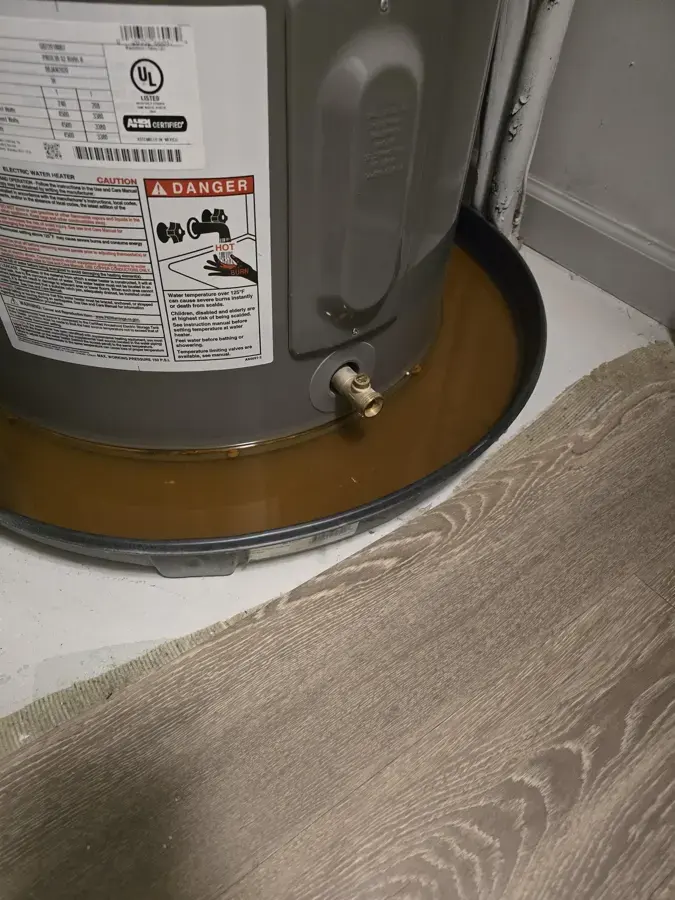
In Garner homes, water heaters sit in garages, hall closets and attics, and where a tank sits decides how a failure plays out. The same tank can flood a slab edge, soak a wall or bring down a ceiling.
Key takeaways
- Garage tanks spread water across the slab and into baseboards, closet tanks send it into wall framing and subfloor, and attic tanks bring it through the ceiling.
- Rust at the base, a damp floor or a hissing sound are early warnings.
- Shut off the cold water supply to the tank and the power or gas before dealing with the water.
- Wet drywall, insulation and subfloor need drying with readings, not just towels.
- A drain pan with a pipe to a safe spot limits the damage from a slow drip but not from a full failure.
Why location changes the damage
Garner's housing mixes ranch and split-level homes from the 1960s through the 1990s with newer slab and townhome neighborhoods on the south and east sides. Water heaters appear in all of them, in garages, closets and attics.
Garage tanks
A failed garage tank spreads water across the concrete and toward the walls. The slab does not soak up much, but bottom plates and baseboards along the wall do, and water can pass into the house under the door.
Closet tanks
A tank in a closet sends water into wall framing, flooring and the subfloor below. A hall closet can leak into bedrooms and a crawl space beneath the floor.
Attic tanks
An attic tank is the costliest to fail. Water soaks insulation and comes through the ceiling below, often into several rooms.
Townhomes and newer slab neighborhoods
The newer slab and townhome neighborhoods on Garner's south and east sides often put the tank in a utility closet or a garage bay. With no crawl space beneath, water tends to stay on the slab and in the walls, which makes fast extraction and wall readings the main tasks.
Warning signs before a tank fails
Tanks rarely give long notice, but some signs are worth acting on.
- Rust-colored water or stains at the base of the tank
- A puddle, damp floor or a rusted drain pan
- Rumbling, popping or hissing while the tank heats
- A relief valve that drips
- A faint ceiling stain below an attic tank
What to shut off first
Stopping new water is the first priority. Doing it in the right order keeps the job safe.
- Close the cold water supply valve above the tank.
- Turn off the power at the breaker or the gas at the control.
- Open a hot tap to relieve pressure and let the tank drain slowly if it is safe.
- Keep people and pets away from any wet area near wiring.
- Photograph the tank, the floor and the surrounding walls.
If water is already moving toward the house
In a garage, water can run toward the house door and under it. Put towels or a rolled blanket along the threshold and sweep water toward the garage door rather than inward.
What gets extracted, removed and dried
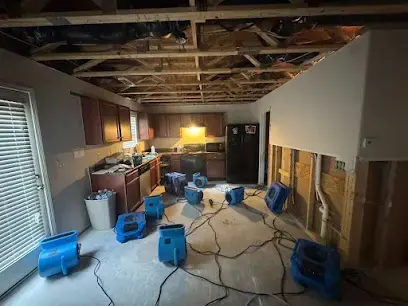
A water heater leak cleanup begins with water extraction to pull standing water out of the garage, closet or attic floor. Crews then take moisture readings to see where it traveled.
Baseboards often come off so the wall cavity can dry. Wet insulation is removed, and drywall that stayed wet is cut out.
Subfloor and framing are dried with dehumidifiers and air movers until the readings drop.
When the tank is in the attic
Attic failures add a ceiling problem on top of the leak. A ceiling leak from a tank can bring drywall and insulation down.
Garner crews also see attic air handlers whose condensate drains clog in humid summers, which can look like a tank leak from below. The attic floor, the ceiling and the joist bays are checked together.
- Do not stand under a sagging ceiling.
- Keep the room closed until the area is checked.
- Expect the ceiling and insulation to come out where they are soaked.
Why hot, humid summers matter
Attic air handlers in Garner can leak at the same time a water heater fails, since both sit above the ceiling in many homes. Humid summers also slow drying, so the attic, the ceiling and the joist bays are dried together instead of one at a time.
What the drying visit looks like for each location
The work differs by where the tank sits, even though the goal is the same: remove the water, find where it went and dry what is left.
Garage and slab edge
The crew pulls water off the slab, lifts baseboards and checks the bottom of the wall for wet drywall and plates. A slab dries with air movement and dehumidifiers, while framing needs readings to confirm it is ready.
Closet and hallway
The crew opens the wall behind the tank if readings show water in the cavity, and checks flooring in the hall and adjoining rooms. If the closet backs onto a crawl space, the floor system beneath is checked too.
Gas, electric and safety
Gas tanks need the gas shut off at the control, and electric tanks need power shut off at the breaker. A plumber should check the connections before either is turned back on, since water can damage the burner area or elements.
A quick yearly check
Once a year, look at the base of the tank, the drain pan and the pipes above it. A small stain or a green crust at a fitting is an early sign worth a plumber's attention before a full failure.
Replacement and prevention
A leaking tank is replaced, not patched. A plumber can advise on the new tank, the drain pan and where it should sit.
Looking at the base of the tank a couple of times a year and learning where the cold water shutoff is catches most problems early. A tank well past its expected life is worth replacing before it fails.
See structural drying for what follows once the water is out.
Questions
Can a leaking water heater be repaired?
A tank that leaks from the shell is normally replaced. A leaking valve or connection can sometimes be repaired by a plumber.
Is water from a water heater leak clean?
Usually it is clean water but can pick up dirt and rust from the tank. It still soaks drywall and insulation quickly.
Does a drain pan prevent damage?
A pan with a pipe to a safe spot can catch a slow drip. It cannot hold a full tank failure.
What if the tank is in the attic?
Shut off the supply and power, keep out from under the ceiling and call a plumber and a restoration crew. Ceiling and insulation damage is likely.
Will insurance pay for a water heater leak?
Many policies cover sudden water damage but not the tank itself. Check the wording and keep photos and invoices.
How can I tell which valve shuts off the water heater?
The cold water supply valve is on the pipe that feeds the top of the tank. Learn where it is now so it can be closed fast during a leak.