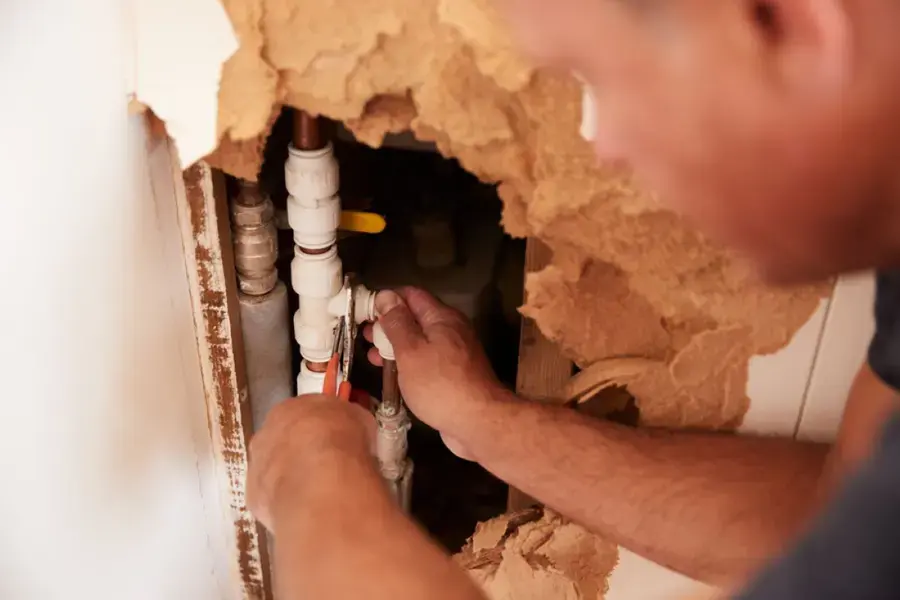
Garner grew quickly from the 1960s through the 1990s, and some homes from the late 1970s to the mid 1990s were plumbed with polybutylene supply pipe. When a joint in that pipe fails, the water often runs inside a wall or ceiling for a while before anyone sees it.
Key takeaways
- Polybutylene supply pipe was installed from the late 1970s to the mid 1990s, so many Garner homes from those years may still have it, alongside aging copper.
- The first sign is usually small: a damp baseboard, a faint ceiling stain, a musty smell or a water meter that moves when every tap is off.
- When a pipe lets go, shut off the main supply first and then deal with the water.
- Wet drywall, insulation and framing need drying with meters, not just fans.
- A plumber can confirm the pipe type and recommend repiping before the next failure.
Why the late 1970s to mid 1990s matters in Garner
Garner's suburban growth from the 1960s through the 1990s produced a lot of ranch and split-level homes. The years from the late 1970s to the mid 1990s overlap with the period when polybutylene was used for supply pipe.
That does not mean every home from those years has it. Some were plumbed in copper, and others have had pipe replaced since.
How to tell what is in the walls
The pipe is a flexible plastic, usually gray, and it often shows near the water heater, at the main shutoff or in the crawl space. A plumber can identify it quickly and say whether the fittings are original.
Aging copper is part of the picture
Garner homes also carry aging copper. Pinholes and worn joints in copper can behave a lot like plastic failures, so the warning signs below apply to both.
Early signs of a failing joint
Most pipe failures announce themselves in small ways first. The trick is to notice them before the drywall does.
- A water meter that keeps moving when every tap, appliance and ice maker is off
- A baseboard or wall that feels cool or soft near a bathroom, kitchen or water heater
- A faint brown ring on a ceiling below a bathroom or an attic pipe
- Pressure that drops for no clear reason, or a hissing sound inside a wall
- A musty smell that returns after the room has been aired out
Where the water goes in a ranch or split-level
In a ranch house the pipe often runs through the attic or the crawl space, so water can end up in either direction. In a split-level, water from an upper bath can travel down through a ceiling into a lower room.
Water follows framing, so the visible stain is often far from the real leak.
Crawl space and floor
A failed joint under the house drips onto insulation and subfloor, where it can sit unseen. Soft flooring or a sour smell near a vent are common clues.
Walls and ceilings
Inside a wall, water wicks into drywall and insulation and can reach the ceiling below. A ceiling leak that appears with no rain on the roof often starts this way.
What to do when a pipe lets go
Speed matters, but order matters more. The first step is always the same.
- Shut off the main water supply, then open a low tap to drain the pipes.
- Switch off power to any room where water is dripping through a ceiling or light fixture.
- Photograph the damage before anything is moved.
- Move furniture and valuables out of the wet area.
- Call a plumber for the repair and a restoration crew for the water.
What not to do
Avoid opening walls or ceilings looking for the source before the water is shut off, and do not cover a stain with paint. Paint hides the sign without stopping the water, and the damp wall behind it keeps getting worse.
How the drying works after a burst
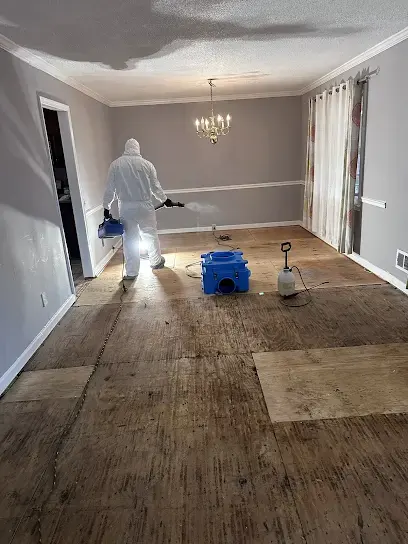
A burst pipe water damage job starts with pulling out standing water through water extraction. Crews then open the wall or ceiling where the readings show water, because drywall and insulation that stay wet are usually removed.
Dehumidifiers and air movers are set for the size of the space, and readings are repeated until the framing is dry. Finished repairs come after that, not before.
Questions to ask a plumber about the pipe
A plumber can answer most worries about supply pipe in a single visit. Having a short list of questions makes the visit worth more and gives a homeowner something concrete to compare.
What is in the walls and crawl space
Ask what material the supply pipe is, where it runs and what the fittings are made of. Plastic pipe with metal or plastic fittings can fail at different points, and the answer shapes the repair.
- Is any of the supply pipe polybutylene, and is it the whole house or only part of it?
- Where are the joints that are hardest to reach?
- Does the water heater connection use the same pipe?
Repair or repipe
A single failed joint can be fixed, but a plumber may say the rest of the system is likely to follow. Ask for a written estimate for both a repair and a full replacement, and whether walls and ceilings must be opened to do either.
What to ask about drying
If the leak has already wet a wall or ceiling, ask the plumber to leave the opening accessible for the restoration crew. Closing it before readings are taken can trap moisture inside the cavity.
Repiping, insurance and next steps
If a home has polybutylene or old copper that has failed once, a plumber may recommend replacing the supply system with copper or PEX. That is a plumbing decision and should be made with a written estimate.
On the insurance side, ask how the policy treats a sudden pipe failure compared with slow seepage over time. Keep photos, the plumber's invoice and notes on what was removed.
Questions
How can I tell if my Garner home has polybutylene pipe?
Look at pipe near the water heater, the main shutoff or in the crawl space. It is usually a gray flexible plastic, and a plumber can confirm it quickly.
Does polybutylene always leak?
No. Many homes with it have gone years without a failure, but joints are the usual weak point, so it is worth watching and having a plumber assess it.
Is a small ceiling stain urgent?
A stain that grows, or that appears without rain, is worth checking right away. Wet drywall and insulation lose strength and can hold moisture.
Should the water be shut off at the main or at a fixture?
If the source is unknown, shut off the main. A single fixture shutoff only helps when the leak is clearly at that fixture.
Will drying make the repair unnecessary?
No. Drying removes water and protects the structure, but the failed pipe still has to be repaired or replaced by a plumber.
What does a slow leak inside a wall cost compared with a sudden burst?
Slow leaks are often more expensive per drop because they go unnoticed. Wet insulation, soft framing and long-wet drywall add up while a sudden burst is usually found fast and dried sooner.