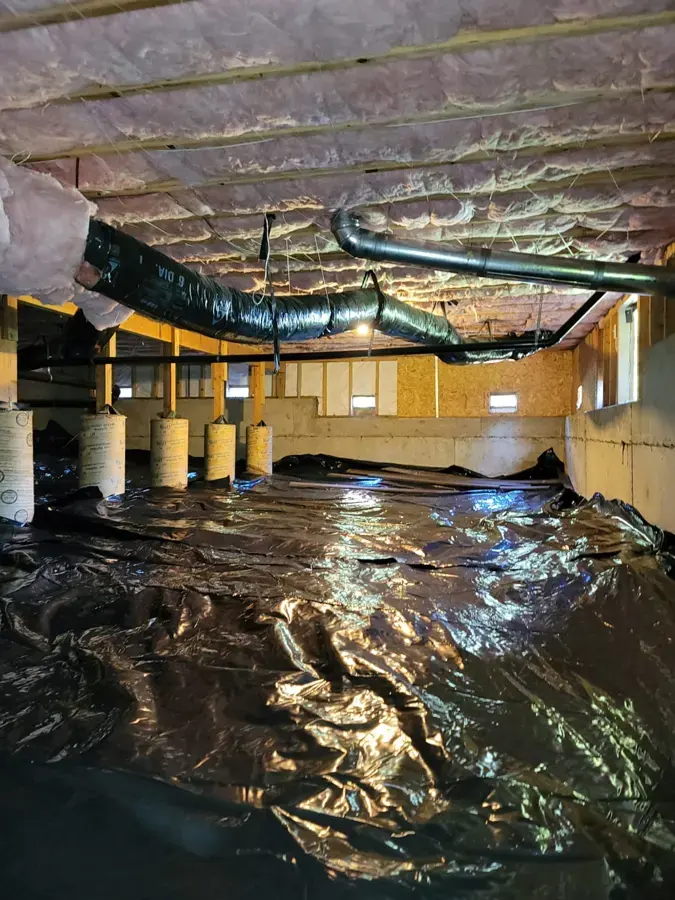
Heavy rain in Garner does not always stop at the gutters. In many ranch and split-level homes built from the 1960s through the 1990s, it ends up under the floor, in a vented crawl space that most owners only visit when something goes wrong.
Key takeaways
- Standing water, sagging insulation and a musty smell under the floor point to a crawl space that took on rain, while damp air alone usually leaves no puddle.
- Eastern Piedmont red clay drains slowly and holds rain against foundations, so water can keep arriving after the storm has passed.
- Stop any pipe source first and keep the power off for anything near standing water.
- Pumping is only the first step: wet joists, subfloor and insulation need controlled drying with moisture readings.
- Photos of the water level and the wet insulation help later with a claim.
Standing water or damp air: how to tell
A crawl space can feel humid in a Garner summer without ever flooding. The question is whether water is sitting on the ground or only hanging in the air.
A flashlight from the access hatch answers most of it. Do not climb in if water is touching wiring, ducts with electrical parts or a heater.
Signs of standing water
Standing water shows up as a shine on the soil or ground cover, drips from the floor above and insulation that has dropped from between the joists.
- A visible puddle or wet, dark patches on the ground
- Insulation hanging down or lying in the water
- A sour, earthy smell in the hall closet or near floor vents
Signs of damp air only
Damp air tends to fog a flashlight beam and leave a cool, clammy feel without a puddle. It still matters, because humid air and wet wood together can hold moisture in the framing for weeks.
Why Garner crawl spaces take on water
Garner grew mostly between the 1960s and the 1990s, and ranch and split-level homes on vented crawl spaces are a large part of that housing. Vents let air move, but they also let rain-driven water and humid summer air in.
Red clay that drains slowly
The eastern Piedmont soil around Garner is red clay. It drains slowly and holds rain against foundations and under houses, so a yard that looks dry on top can still push water toward the low spot beneath a floor.
Storm years people remember
Fran in 1996 and Matthew in 2016 are the tropical systems that come to mind when Garner talks about heavy rain. Summer thunderstorms can drop a lot of water in a single afternoon too.
Swift Creek, Lake Benson and Lake Wheeler are named water features around Garner, and low spots near any creek or lake deserve extra attention.
What to do before anyone arrives
The goal is to keep the problem from growing while the water is still easy to manage.
- Turn off power to the crawl space circuit if the panel allows it and no one has to stand in water to reach it.
- Shut off the main water supply if a pipe or fitting under the house may be leaking.
- Take photos of the water level, the insulation and any stains on the floor above.
- Move rugs, boxes and furniture off any floor that feels soft or damp.
- Stay out of the crawl space if water has reached outlets, the air handler or the water heater.
What gets pumped, removed and dried
Crews start with the water itself, using pumps and water extraction to bring the level down before anything else is judged.
Insulation and ground cover
Wet insulation holds water against the floor above, so it usually comes out rather than drying in place. Torn or soaked ground cover is lifted and replaced once the space is dry.
Joists, subfloor and the air
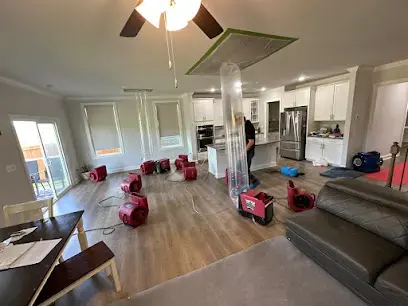
Wood needs time and readings, not guesses. A crawl space water removal visit normally includes meter readings on joists and subfloor, then dehumidifiers and air movers matched to the space.
Drying continues, with repeat readings, until the framing reaches a normal range. That is what structural drying means in practice.
When the water is not from rain
Rain is the obvious suspect, but it is not the only one. Garner homes often have air handlers and water heaters in or near the crawl space, and either can add water under the floor.
A clogged condensate drain in a humid summer can drip for weeks, and a supply pipe can leak without any storm at all.
- Water that appears on a dry, sunny day suggests a pipe or condensate drain.
- Water only after rain suggests grading, gutters or the vents.
- Water that smells like sewage needs professional handling, since it is treated as contaminated.
What happens if the water is left alone
Water under a house rarely stays a crawl space problem. It moves upward into the floor system, and the longer the wood stays wet, the more it costs to put right.
Joists, subfloor and flooring
Wet joists and subfloor lose stiffness and can swell. The first sign inside the house is often a floor that feels spongy, a squeak that was not there before or boards that start to cup.
Once the framing stays damp, the flooring above has little chance of staying flat.
Smells, air and pests
A damp crawl space sends its air upward, because warm air in the house pulls from below. That is why a musty smell in a closet or near a floor vent so often traces back to the space under the floor.
Standing water can also draw insects and rodents, and long dampness invites mold growth on wood and insulation.
Ducts, wiring and equipment
Many Garner crawl spaces hold duct runs, wiring and sometimes an air handler. Water that reaches them can damage insulation on the ducts and create electrical hazards, which is another reason to keep the power off until an electrician says it is safe.
Keeping water out afterward
Once the crawl space is dry, a few changes lower the odds of a repeat. Most are about moving rain away from the house before it reaches the clay beside the foundation.
- Extend downspouts so they empty well away from the foundation.
- Keep the soil beside the house sloped away from the walls.
- Clear gutters and check that vents are not blocked by mulch or debris.
- Look under the house after every major storm, while a problem is still small.
Questions
Is it normal for a Garner crawl space to be damp?
Some humidity is normal in a vented crawl space during humid summers. Standing water, dripping or wet insulation is not normal and should be checked.
Can a homeowner pump out a crawl space with a shop vacuum?
A small puddle can be cleared that way, but a shop vacuum does not dry the joists or insulation. It also carries a shock risk if cords or outlets are near the water.
How long does it take to dry a crawl space?
It depends on how long the wood stayed wet and how large the space is. Moisture readings, not a calendar, decide when drying is finished.
Does rain through the vents mean the vents should be closed?
Closing vents does not fix drainage and can trap humidity. A plumber or contractor can advise on options for a specific house.
Does homeowners insurance cover rain water in a crawl space?
Coverage depends on the policy and on whether the water came from a sudden plumbing failure or from rising ground water. Ask the insurer before work begins, and keep photos.
Should the first call go to a plumber or a restoration crew?
If a pipe is leaking, shut off the water and call a plumber for the repair. If the water is from rain or already on the ground, a restoration crew can start pumping and drying while the cause is sorted out.