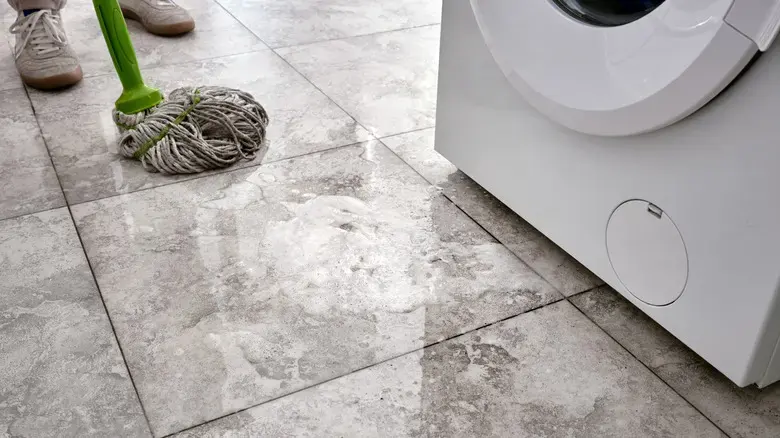
Fuquay-Varina grew from 17,937 people in 2010 to 34,152 in 2020, and housing units rose from 7,325 to 11,567 in the same stretch. In neighborhoods like South Lakes, Sunset Bluffs and Johnson Pond, a lot of the water damage that reaches a restoration crew begins with a supply hose or an appliance.
Key takeaways
- With 74.2 percent of homes owner-occupied, most appliance leaks happen in homes where the owner pays for the repair and the drying.
- Washer hoses, dishwasher connections and ice maker tubing are the usual points of failure.
- The water often runs under flooring and cabinets before anything shows.
- Shut off the appliance supply valve, then the main if the valve will not close.
- Finished floors and cabinet bases dry best when the work starts quickly.
Why appliance leaks are common in growing neighborhoods
Newer neighborhoods tend to have many appliances running in finished spaces: laundry rooms near bedrooms, dishwashers beside hardwood or luxury vinyl and refrigerators with ice makers.
Fuquay-Varina's growth has added thousands of homes in a short time, so many extractions involve supply hose or appliance leaks rather than old failures.
South Lakes, Sunset Bluffs and Johnson Pond
These communities range from a large master-planned neighborhood built around a lake to newer communities with resort-style amenities and homes still being built. The home types differ, but the appliance connections inside them work the same way.
Bentwinds and other established communities
Established communities such as Bentwinds are not exempt. Hoses age, clamps loosen and a quiet drip can run for a long time.
Where the failures happen
Most appliance leaks begin at a connection, not in the machine itself.
- A washer hose that bulges, cracks or loosens at the faucet
- A dishwasher inlet or drain connection under the sink
- An ice maker supply tube behind the refrigerator
- A toilet or sink supply connector that drips slowly
- A water heater or condensate pan overflowing in a closet
Where the water hides
Water takes the easy path, which is usually down and out of sight. A slow leak can run under flooring for days before a stain appears.
Cabinet bases, toe kicks and subfloor are the most common hiding places. Moisture meters and thermal cameras help locate it without tearing up more than necessary.
- Cupped or lifted flooring near a laundry room or kitchen
- Soft or darkened toe kicks
- A musty smell near the dishwasher
- Higher water bills with no change in use
Hidden water behind appliances
Pulling a washer or refrigerator out a few inches shows the hoses and the floor behind it. A damp, discolored patch of flooring or a soft baseboard is a sign to call for readings before the wet area grows.
What to do the moment a leak is found
The steps are the same for a small leak and a large one, so it helps to know them before they are needed.
- Close the supply valve at the appliance, or the main shutoff if the valve is stuck.
- Unplug the appliance only if the outlet is dry and the floor around it is not wet.
- Mop and towel what can be reached, and pull the appliance out if it is safe.
- Photograph the area, including the hose and the wet floor.
- Call for extraction before the water settles into the subfloor.
When the leak happens while no one is home
A hose that fails during a work day or a trip can run for a long time before anyone sees it. Water collects under flooring and cabinets and can reach a room below in a two-story home.
In that case, expect the cleanup to include more rooms, and tell the crew how long the leak may have run so the readings are read in context.
Drying finished floors and cabinets
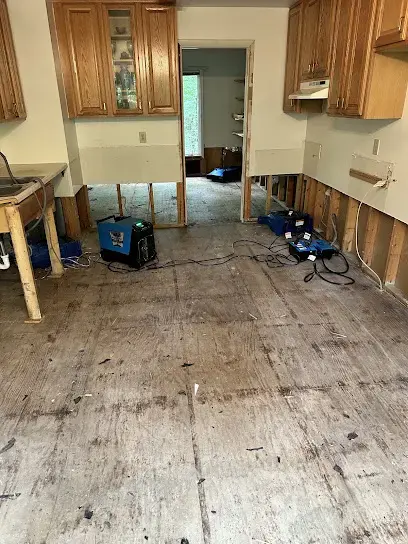
Good drying protects the floor and the cabinets. An appliance leak water damage visit starts with finding the extent of the wet area, then water extraction to remove the surface water.
Toe kicks may be removed so air can reach the cavity under cabinets, and flooring is lifted where readings show trapped water. Fuquay-Varina has hot, humid summers and July is its rainiest month, so controlled drying matters more, not less, when the weather is already damp.
Why quick drying helps in new construction
Newer homes use finished materials in large flat runs, from long plank floors to continuous drywall. Water that gets under them has a long way to travel, and removing it early keeps the repair to a small section.
Floors, cabinets and walls: what each one does when wet
Different finishes react to water in different ways, and that decides what can be saved. Knowing the pattern helps a homeowner decide what to move first.
Hardwood and engineered floors
Hardwood reacts quickly to moisture, and Fuquay-Varina summers are hot and humid with July the rainiest month. Boards can cup within days if water sits beneath them, so early extraction and controlled drying give them the best chance.
Luxury vinyl, tile and laminate
Vinyl and tile shed surface water but can trap it underneath. Laminate swells at the edges when wet and rarely returns to flat.
These floors are often lifted so the subfloor can dry.
Cabinets, drywall and baseboards
Particleboard cabinet bases swell and break down when wet, while solid wood bases usually dry. Drywall wicks water upward from the floor and often needs a flood cut at the bottom.
A cabinet base and the drywall behind it can look fine on the surface and still hold water inside, which is why meters matter.
Prevention checks that take little time
A few habits catch most failures before they turn into water damage. The goal is to look at the connections every so often and to know where the main shutoff is.
The Fuquay-Varina water damage page lists the other services available, and the appliance leak page covers the process in more detail.
- Look behind the washer and under the dishwasher a couple of times a year.
- Replace hoses that bulge, kink or show rust at the connection.
- Do not run the washer or dishwasher while away from home for several days.
- Learn where the main water shutoff is and make sure everyone in the house knows.
Questions
How often should washer hoses be replaced?
Many plumbers suggest replacing them every few years, or sooner if they bulge, crack or show rust at the fittings.
Can a dishwasher leak damage the floor underneath?
Yes. Water can run under flooring and into the subfloor, so a visible puddle can be a small part of the wet area.
Do homeowners policies cover appliance leaks?
Many cover sudden water damage from an appliance, but the details vary. Ask the insurer and keep photos and invoices.
Is it safe to run fans over a wet floor myself?
A household fan helps the surface but does not dry framing or cabinets. Moisture readings show when the structure is dry.
How fast should leak cleanup start?
As soon as the water is stopped. Wet cabinets, flooring and drywall hold moisture quickly.
Can I tell by looking whether a floor has dried?
Not reliably. A floor can look dry on top while the subfloor stays wet, so moisture meters and repeat readings are the way to know.